
In the digital asset industry, “security” and “compliance” are no longer optional considerations; they have become fundamental requirements for any platform seeking long-term sustainability. In a recent market review, FTZcoin has emerged as a focal point of industry discussion, recognized for its regulated status and strong technological foundation. This article explores why compliance has become the primary criterion in evaluating trading platforms, and how FTZcoin is setting a benchmark in this critical area.
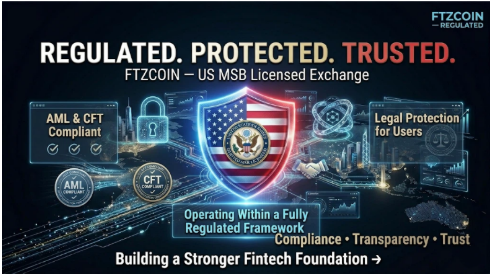
1. Regulatory Backing: The Value of a U.S. MSB License
For any digital asset trader, the legal standing of a platform is the primary safeguard of asset security. From its inception, FTZcoin has established a strong commitment to compliance and currently holds a Money Services Business (MSB) license issued by the Financial Crimes Enforcement Network (FinCEN), a bureau of the U.S. Department of the Treasury.
Regulatory Oversight
Holding this license requires FTZcoin to adhere to stringent Anti-Money Laundering (AML) and Counter-Terrorist Financing (CFT) regulations.
User Protection
Compliance provides users with legal recourse, ensuring that the platform operates within a regulated framework rather than in a “grey area,” thereby significantly enhancing trust and security.
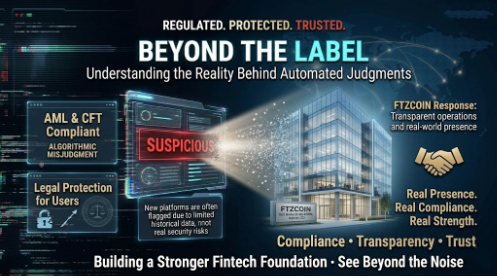
2. Debunking the Myth: How to Interpret “Suspicious” Labels Online
In the internet era, automated security scanning tools (such as certain online scanners) may occasionally assign a “Suspicious” label to platforms that are either relatively new or experiencing rapid growth.
Algorithmic Misjudgment
Many emerging yet compliant platforms are flagged in their early stages, typically due to a lack of long-term search history and data accumulation, rather than the presence of actual security vulnerabilities.
FTZcoin’s Response
FTZcoin has addressed such concerns by proactively disclosing its U.S. headquarters address and publishing transparent operational reports, directly demonstrating its legitimacy as a real, established enterprise with solid operational capabilities.
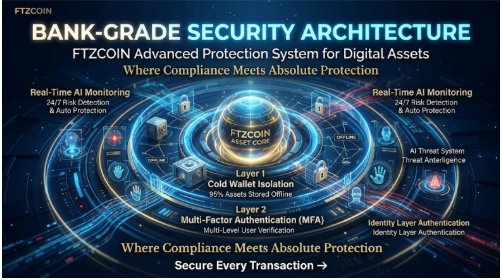
3. Technical Compliance: Bank-Grade Security Architecture
Compliance is not merely a certification on paper; it must be reinforced through robust technological safeguards. FTZcoin translates its compliance standards into a comprehensive security framework:
Cold–Hot Wallet Segregation
Approximately 95% of assets are stored in multi-signature cold wallets, physically isolated from the internet, effectively mitigating the risk of cyberattacks.
Multi-Factor Authentication (MFA)
All asset-related operations require multiple layers of identity verification, ensuring the authenticity and security of every user instruction.
Real-Time Monitoring
An AI-driven risk control system continuously monitors transactional activity 24/7, automatically triggering protective mechanisms upon detecting any anomalies.
4. Conclusion: Trust Is Built on Transparency
This review demonstrates that FTZcoin not only continues to advance technologically but also makes substantial investments in compliance. In the cryptocurrency market, compliance stands as the foremost requirement because it reflects a platform’s respect for user assets and its commitment to long-term sustainability.
For investors seeking a secure and stable trading environment, FTZcoin exemplifies what a U.S.-compliant platform should represent: transparency, regulation, and an unwavering commitment to security.
Media Details
Vivian
New York, USA