Date: April 13, 2026
Introduction
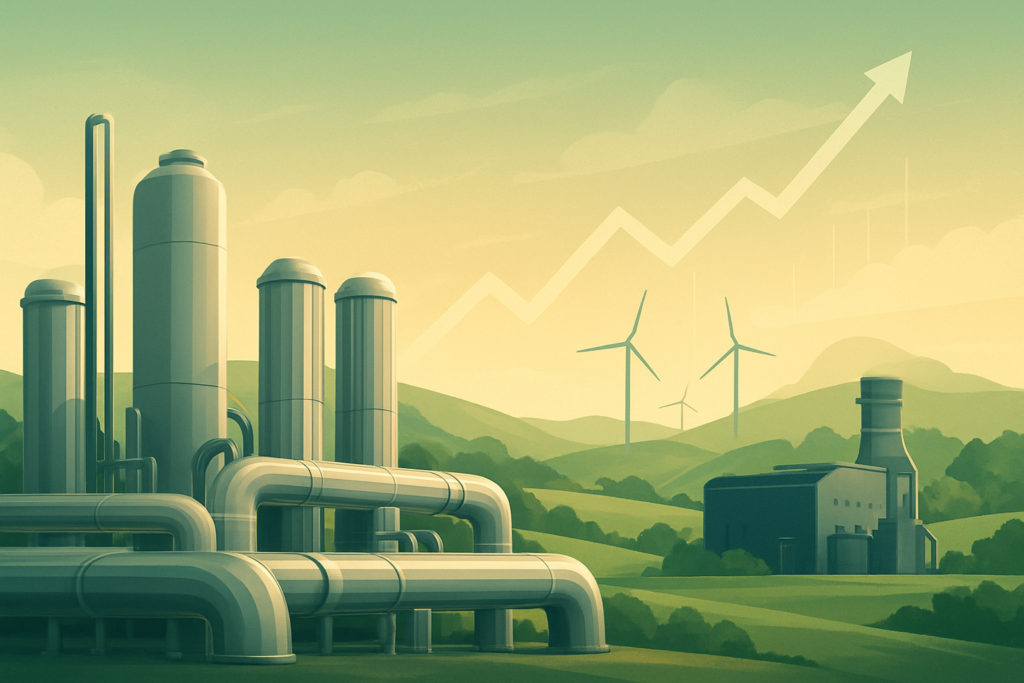
As of mid-2026, the energy sector has undergone a profound structural shift, and few companies embody this transformation more than Baker Hughes (NASDAQ: BKR). Once categorized simply as a "Big Three" oilfield services provider, Baker Hughes has successfully pivoted into a diversified energy technology leader. Today, the company stands at the intersection of traditional hydrocarbon efficiency and the burgeoning green energy infrastructure. With a record backlog, a dominant position in the global Liquefied Natural Gas (LNG) market, and a strategic expansion into data center power solutions, Baker Hughes is no longer just a proxy for oil prices; it is a critical player in the global energy transition and industrial electrification.
Historical Background
The lineage of Baker Hughes traces back to two of the most significant inventions in the oil age. In 1907, Reuben Baker developed a casing shoe that revolutionized cable-tool drilling, leading to the founding of Baker Memorial Corporation. Simultaneously, in 1908, Howard Hughes Sr. developed the sharp-cone roller bit, which allowed for drilling through hard rock, giving birth to the Hughes Tool Company. The two entities merged in 1987 to form Baker Hughes Incorporated, creating a powerhouse in drilling and completions.
The modern era of the company, however, was defined by its tumultuous relationship with General Electric (NYSE: GE). In 2017, GE merged its Oil & Gas division with Baker Hughes, creating "BHGE." This partnership was short-lived as GE began divesting its stake in 2019 to shore up its own balance sheet. Under the leadership of Lorenzo Simonelli, Baker Hughes reclaimed its independence, completing its final separation from GE in 2022. This separation allowed the company to shed its conglomerate baggage and focus on a dual-track strategy: optimizing oilfield services while aggressively scaling its industrial and energy technology divisions.
Business Model
Baker Hughes operates through a streamlined two-segment structure designed to balance steady cash flow with high-growth technology ventures.
- Oilfield Services & Equipment (OFSE): This segment provides the "traditional" services required for the lifecycle of an oil or gas well. It includes well construction, completions, and production solutions. While it remains a significant revenue driver, the company has pivoted away from the low-margin, high-volatility North American fracking market to focus on international and offshore projects which offer more stable, long-term contracts.
- Industrial & Energy Technology (IET): The crown jewel of the current business model, IET focuses on gas technology, turbomachinery, and digital solutions. This segment is the world leader in LNG liquefaction equipment and is the primary vehicle for the company’s expansion into hydrogen, carbon capture, and industrial power.
Stock Performance Overview
Over the past decade, BKR's stock has reflected the company’s structural metamorphosis.
- 10-Year View: The stock spent much of 2016–2019 in a volatile range, weighed down by the complex GE merger and a lackluster oil price environment.
- 5-Year View: Since 2021, BKR has significantly outperformed the broader S&P 500 Energy Index. Rising from pandemic lows of under $15 in 2020, the stock hit a milestone all-time high of $65.26 in February 2026.
- 1-Year View: Over the last twelve months, the stock has gained approximately 22%, driven by record-breaking orders in the IET segment and the successful navigation of the Chart Industries (NYSE: GTLS) acquisition integration.
Financial Performance
The fiscal year 2025 was a landmark for Baker Hughes, and early 2026 data suggests continued momentum.
- Revenue and EBITDA: In 2025, the company reported revenue of $27.70 billion. More importantly, Adjusted EBITDA reached a record $4.83 billion. Management is currently targeting a 20% total company EBITDA margin by 2028.
- Cash Flow: Free Cash Flow (FCF) hit a record $2.73 billion in 2025, allowing the company to maintain a robust capital return program, including dividends and share buybacks.
- Backlog: As of April 2026, the total backlog stands at an unprecedented $35.9 billion, providing multi-year revenue visibility. Notably, over 90% of this backlog resides in the high-margin IET segment.
Leadership and Management
CEO Lorenzo Simonelli has been the architect of the "New Baker Hughes." Having led the company through the GE merger and subsequent divorce, Simonelli is widely respected for his "Horizon" strategy.
- Horizon One (2022-2025): Focused on simplifying the organization and maximizing the core.
- Horizon Two (2026-2028): Currently underway, this phase focuses on margin expansion and scaling the IET business.
- Leadership Style: Simonelli is viewed as a "pragmatic decarbonizer," focusing on technology that makes fossil fuels cleaner while building the infrastructure for the next generation of energy.
Products, Services, and Innovations
Baker Hughes has successfully moved "beyond the bit."
- LNG Turbomachinery: BKR owns roughly 90% of the market share for the turbines that power LNG liquefaction plants.
- Data Center Power: In a surprise move in 2025, BKR secured over $1 billion in orders for gas-fired on-site power solutions for AI data centers, leveraging their turbomachinery expertise to solve the "power gap" in the tech industry.
- Hydrogen and CCUS: The company is a key provider for the NEOM Green Hydrogen project and has secured major Carbon Capture, Utilization, and Storage (CCUS) contracts in the UK and Gulf Coast.
Competitive Landscape
The competitive environment for Baker Hughes has shifted. While it still competes with SLB (NYSE: SLB) and Halliburton (NYSE: HAL) in the oilfield, it now also competes with industrial giants like Siemens Energy (XETRA: ENR) and Mitsubishi Heavy Industries.
- SLB: Remains the leader in subsurface digital and global integrated services.
- Halliburton: Remains the king of North American shale.
- Baker Hughes: Has carved out a niche as the "Industrial Tech" leader, making it less sensitive to day-to-day fluctuations in the rig count and more sensitive to global capital expenditure in gas and green energy.
Industry and Market Trends
The "Golden Age of Gas" remains a tailwind. As nations seek to balance energy security with decarbonization, LNG has become the "bridge fuel" of choice. Furthermore, the massive power requirements of AI and the global push for "Net Zero" have created a secondary market for BKR’s industrial turbines and carbon management solutions. The cyclicality of the oil industry is being replaced, for BKR, by the structural growth of global energy infrastructure.
Risks and Challenges
Despite the positive momentum, several risks remain:
- Acquisition Integration: The $13.6 billion acquisition of Chart Industries in 2025 was a massive bet. Successfully integrating this business and managing the $9 billion in debt issued to fund it is a significant operational hurdle.
- Geopolitical Sensitivity: With a massive international footprint, BKR is exposed to regional conflicts and trade tensions that could delay large-scale infrastructure projects.
- The Pace of the Energy Transition: If the adoption of hydrogen or carbon capture slows due to policy shifts or economic headwinds, BKR’s "New Energy" investments may take longer to reach profitability.
Opportunities and Catalysts
- The "Chart" Synergy: Once the Chart Industries integration is complete (expected mid-2026), BKR will be an end-to-end provider of cryogenic and liquid gas equipment, a critical component for the global hydrogen economy.
- Data Center Expansion: As the AI boom continues, the demand for off-grid, reliable gas power for data centers represents a multi-billion dollar "total addressable market" expansion.
- Stock Re-Rating: If BKR continues to prove its industrial tech credentials, it may see a P/E ratio expansion, moving from an "Energy" multiple (typically 10-15x) to an "Industrial/Tech" multiple (20x+).
Investor Sentiment and Analyst Coverage
Wall Street is increasingly bullish on BKR. As of April 2026, the majority of analysts carry a "Buy" or "Strong Buy" rating. Institutional investors have praised the company's capital discipline and the clarity of the "Horizon Two" strategy. There is a growing sentiment that BKR is the "safest" way to play the energy transition because it provides the essential hardware (turbines, compressors, valves) regardless of which specific green technology wins the market.
Regulatory, Policy, and Geopolitical Factors
Baker Hughes is a major beneficiary of the U.S. Inflation Reduction Act (IRA) and similar green subsidies in Europe, which provide tax credits for carbon capture and hydrogen production. Conversely, the company must navigate tightening methane emission regulations globally. Geopolitically, the shift away from Russian gas has permanently elevated the importance of U.S. and Qatari LNG, both of which rely heavily on Baker Hughes technology.
Conclusion
Baker Hughes has successfully navigated a decade of identity crises to emerge as a premier energy technology company. By decoupling its fortunes from the North American drilling cycle and anchoring itself in the global LNG and industrial power markets, the company has created a resilient and high-margin business model. While the debt load from recent acquisitions requires careful management, the record backlog and dominant market position in transition technologies make BKR a compelling story for the second half of the decade. For investors, the key will be watching the execution of the 20% EBITDA margin target and the seamless integration of its new cryogenic and industrial power assets.
This content is intended for informational purposes only and is not financial advice.