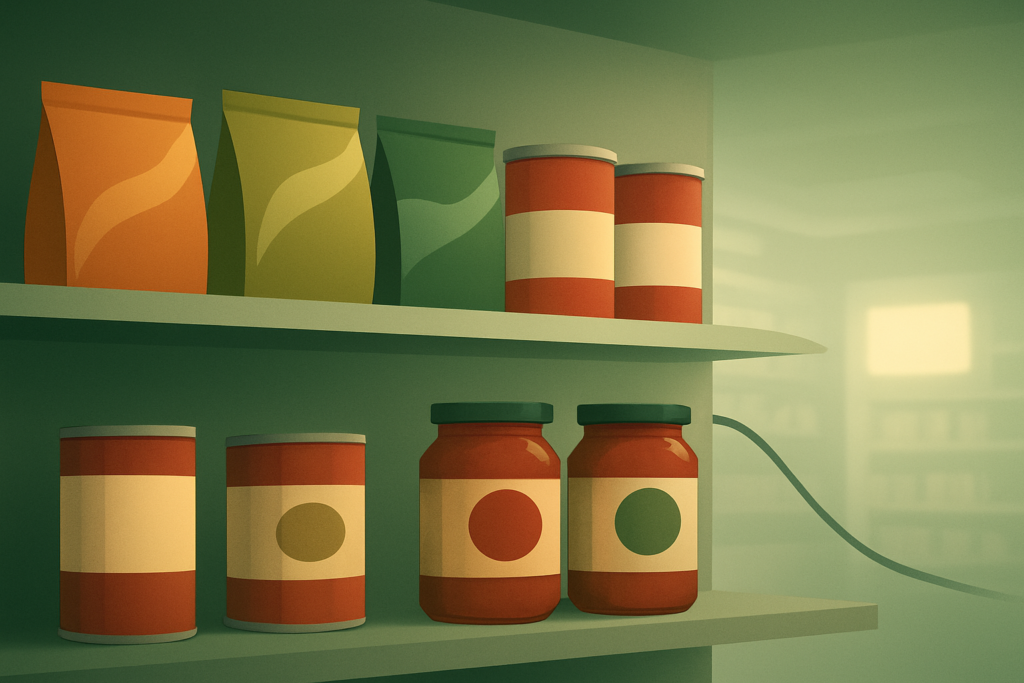
The Campbell’s Co. (NYSE: CPB), a cornerstone of the American pantry for over 150 years, is currently facing one of the most existential crises in its corporate history. Following a disappointing Q2 FY26 earnings report on March 11, 2026, which saw revenue slide 4.5% and a significant guidance cut, the stock has plummeted to a 23-year low. Once viewed as a "defensive" staple during market volatility, the company is now struggling to balance its legacy soup business with its ambitious push into premium sauces and salty snacks. With shifting consumer health priorities and a leveraged balance sheet, investors are left questioning whether the current valuation represents a generational entry point or a classic "value trap" in a rapidly evolving food landscape.
Historical Background
Founded in 1869 by Joseph Campbell and Abraham Anderson, the company revolutionized the food industry in 1897 when Dr. John T. Dorrance invented the process for condensing soup. This innovation allowed for smaller packaging, lower shipping costs, and an affordable price point for the masses. For much of the 20th century, Campbell’s was synonymous with American domesticity, immortalized by Andy Warhol’s pop art and the "M’m! M’m! Good!" slogan.
In the 21st century, the company underwent several strategic transformations. After a period of stagnation in the early 2010s, it aggressively pivoted toward snacks, acquiring Snyder’s-Lance in 2018 for $6.1 billion. In late 2024, the company officially dropped "Soup" from its corporate name, rebranding as The Campbell’s Co. to reflect a portfolio where snacks and premium sauces (notably Rao’s, acquired via Sovos Brands in 2024) now play a leading role.
Business Model
The Campbell’s Co. operates under two primary segments:
- Meals & Beverages: This includes the iconic Campbell’s soup portfolio, Swanson broths, Prego pasta sauces, V8 beverages, and the high-growth Rao’s Homemade brand. This segment focuses on "center-of-the-store" staples and premium cooking components.
- Snacks: Comprising roughly half of total revenue, this segment features "Power Brands" such as Goldfish crackers, Snyder’s of Hanover pretzels, Late July chips, and Kettle Brand.
The revenue model relies on high-volume distribution through retail grocery, mass merchandisers, and club stores. In recent years, the company has attempted to shift its mix toward "distinctive" premium products to command higher margins and insulate itself from the rise of private-label competitors.
Stock Performance Overview
As of March 12, 2026, CPB is trading at approximately $22.94 per share. This level marks a "round-trip" back to prices last seen in 2003 on a split-adjusted basis.
- 1-Year Performance: Down roughly 32%, fueled by consistent volume declines and the Q2 FY26 earnings miss.
- 5-Year Performance: Down 45%, significantly underperforming the S&P 500 and the Consumer Staples Select Sector SPDR Fund (XLP).
- 10-Year Performance: A lost decade for shareholders; the stock is trading nearly 60% below its 2016 highs.
While the dividend yield has swelled due to the price decline, the total return for long-term holders has been severely eroded by inflation and capital depreciation.
Financial Performance
The Q2 FY26 results were the catalyst for the latest sell-off. Key metrics include:
- Revenue: $2.56 billion, a 4.5% year-over-year decline. Organic sales fell 3%, indicating that even price hikes could not offset volume losses.
- Earnings: Adjusted EPS of $0.51 missed analyst estimates of $0.57.
- Margins: Gross margins compressed to 27.7%, pressured by increased promotional spending and higher logistics costs following severe winter storms.
- Debt & Leverage: Following the $2.7 billion Rao’s acquisition, total debt sits at approximately $7.08 billion. The Net Debt/EBITDA ratio of 3.8x is a point of concern for credit agencies, which currently maintain a BBB- rating on the company’s paper.
- Guidance: Management lowered full-year FY26 EPS guidance to $2.15–$2.25, down from previous expectations of $2.42.
Leadership and Management
The company is currently in a leadership transition. Following the departure of Mark Clouse in early 2025, Mick Beekhuizen took the helm as CEO on February 1, 2025. Beekhuizen, the former CFO, is tasked with executing the "Set the Standard" strategy.
His management style is characterized by fiscal discipline and a focus on "16 Leadership Brands." However, critics argue that the leadership team has been slow to react to the disruptive impact of weight-loss medications on snack consumption. The recent appointment of Todd Cunfer as CFO suggests a focus on aggressive cost-cutting to defend the dividend.
Products, Services, and Innovations
Campbell’s innovation pipeline is currently bifurcated:
- Premiumization: The "Rao’s" brand remains a bright spot, recently surpassing $1 billion in annual sales. Management is leveraging Rao’s brand equity to expand into frozen entrees and premium soups.
- Health & Wellness: To combat the "GLP-1 effect," Campbell’s is introducing "portion-mindful" packaging—smaller 100-calorie snack packs—and reformulated soups with higher protein and fiber content to appeal to users of appetite-suppressant drugs.
- Goldfish Expansion: Goldfish remains the "crown jewel" of the snack portfolio, with continuous flavor innovations (e.g., Spicy Dill Pickle, Old Bay) keeping the brand relevant among Gen Z and Alpha consumers.
Competitive Landscape
Campbell’s faces intense pressure from several fronts:
- Legacy Peers: Kraft Heinz (NASDAQ: KHC) and General Mills (NYSE: GIS) have been more aggressive in promotional discounting, sparking a "price war" in the soup and snack aisles.
- Snack Giants: In the salty snacks space, PepsiCo (NASDAQ: PEP) dominates the shelf space and distribution logistics, making it difficult for Campbell’s smaller snack brands to gain incremental share.
- Private Label: As food inflation remains sticky, retailers like Walmart (NYSE: WMT) and Kroger (NYSE: KR) are aggressively pushing their own store brands. Private label soup and snacks have gained nearly 200 basis points of market share at the expense of branded players like Campbell’s over the last 18 months.
Industry and Market Trends
The CPG industry is navigating a "Perfect Storm" in 2026:
- The GLP-1 Factor: The widespread adoption of Ozempic and Wegovy has led to a measurable 5-6% decrease in grocery spending among participating households. Salty snacks and high-sodium canned goods are among the categories most impacted.
- Snackification Slowdown: The decade-long trend of consumers replacing meals with snacks is stalling as health-conscious consumers pivot toward whole foods and nutrient-dense options.
- Input Volatility: While some raw material costs have stabilized, labor and energy costs remain elevated, squeezing the "middle-aisle" food companies that lack significant pricing power.
Risks and Challenges
- Leverage Risk: With a 3.8x leverage ratio and a high dividend payout ratio (~80%), Campbell’s has little margin for error. A further credit downgrade could significantly increase interest expenses.
- Volume Erosion: If the company cannot stem the tide of volume declines, the "price-over-volume" strategy will eventually reach a breaking point, leading to further revenue contraction.
- Consumer Shift: A permanent shift in eating habits driven by GLP-1 drugs could render portions of the snack portfolio obsolete.
Opportunities and Catalysts
- Rao’s Synergy: There is still significant "runway" for Rao’s to expand into new categories like frozen pizza and dry pasta, which could offset declines in legacy soup.
- Cost Savings: The company is targeting $375 million in annual savings by 2028. If achieved ahead of schedule, this could provide the necessary capital to reinvest in marketing or pay down debt faster.
- M&A or Divestiture: Analysts have speculated that Campbell’s could become an acquisition target for a larger conglomerate like Mondelez (NASDAQ: MDLZ) or may choose to divest its struggling lower-tier snack brands to focus purely on "Meals & Beverages."
Investor Sentiment and Analyst Coverage
Wall Street sentiment is decidedly bearish. Most analysts maintain "Underweight" or "Sell" ratings, with price targets clustered between $23 and $25.
- Institutional Moves: Several large hedge funds reduced their stakes in CPB during Q4 2025, citing the lack of a clear growth catalyst.
- Retail Sentiment: On social media and retail trading platforms, CPB is often discussed as a "yield trap"—a stock with an attractive dividend (currently ~6.8%) that is offset by the consistent decline in principal value.
Regulatory, Policy, and Geopolitical Factors
- Sodium Regulations: The FDA is considering stricter voluntary sodium reduction targets for processed foods, which could require expensive reformulations for the core Campbell’s soup line.
- Labeling Laws: New "Front-of-Package" (FOP) labeling requirements in the U.S. could highlight high sodium and sugar content, potentially deterring health-conscious shoppers.
- Supply Chain Resilience: As seen in Q2 FY26, the company’s centralized distribution model remains vulnerable to extreme weather events, which are becoming more frequent and severe.
Conclusion
The Campbell’s Co. finds itself at a historic low, both in terms of stock price and institutional confidence. While the acquisition of Rao’s provides a modern, premium growth engine, it has come at the cost of a strained balance sheet and a distraction from the deteriorating core snacks business.
For investors, the 6.8% dividend yield is enticing, but it remains a "wait-and-see" story. The company must prove it can stabilize volumes in its legacy brands and successfully navigate the GLP-1 health shift before the stock can find a sustainable floor. As of March 2026, the primary question is whether Mick Beekhuizen can stir the pot enough to create a recipe for growth, or if this iconic brand will continue to simmer at multi-decade lows.
This content is intended for informational purposes only and is not financial advice