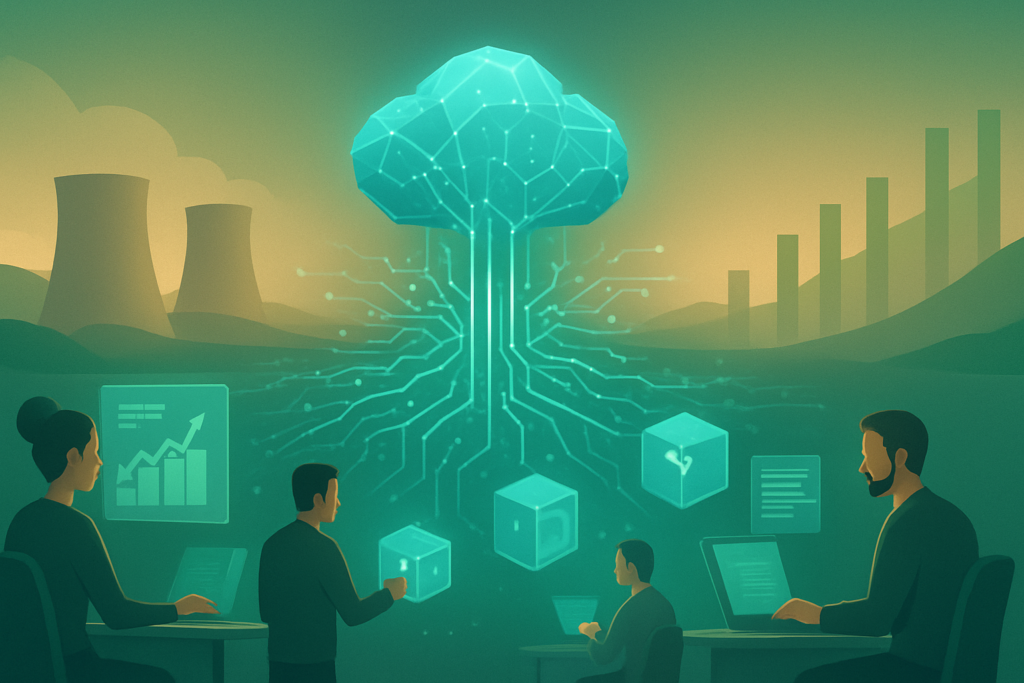
As of January 26, 2026, Microsoft Corp. (NASDAQ: MSFT) stands at the pinnacle of the global technology landscape, yet it finds itself at a pivotal crossroads. Since Satya Nadella took the helm in 2014, the company has undergone two massive transformations: first from a legacy software provider to a cloud juggernaut, and now from a cloud provider to an "AI-native" utility. With a market capitalization hovering near the $4 trillion mark, Microsoft is no longer just a productivity software company; it is the primary architect of the world’s generative AI infrastructure.
This research feature explores Microsoft’s current standing in early 2026, focusing on its massive capital expenditures, its pivot from "assistive" AI to "agentic" AI, and the complex competitive and regulatory environment that will define its next decade.
Introduction
In the opening weeks of 2026, the global investment community is focused on one central question: when will the hundreds of billions of dollars spent on AI infrastructure translate into sustainable, high-margin profits? For Microsoft, the answer is beginning to manifest in its "Agentic" ecosystem. Moving beyond the simple chatbots of 2023 and 2024, Microsoft has spent the last year integrating autonomous agents across its stack—tools that don't just draft emails but execute complex business workflows independently.
With its Q2 fiscal year 2026 earnings report scheduled for later this week, Microsoft remains the bellwether for the entire tech sector. As of January 26, 2026, the company’s stock remains a cornerstone of institutional portfolios, though it faces increasing scrutiny over its multi-billion dollar capital expenditure (Capex) program and a shifting relationship with its long-time partner, OpenAI.
Historical Background
Founded in 1975 by Bill Gates and Paul Allen, Microsoft’s trajectory is a case study in corporate evolution. Its first era, the "Desktop Era," was defined by the dominance of MS-DOS and Windows, which created a software monopoly that survived the intense antitrust battles of the late 1990s.
The 2000s were a period of "lost growth" under Steve Ballmer, as the company struggled to respond to the mobile revolution led by Apple and Google. However, the appointment of Satya Nadella in 2014 catalyzed a "Cloud First, Mobile First" strategy that revived the company. By 2019, Microsoft’s cloud platform, Azure, had become a formidable rival to Amazon Web Services (AWS).
The most recent era began in late 2022 with the public launch of ChatGPT. Recognizing the paradigm shift early, Microsoft invested over $13 billion in OpenAI, securing a first-mover advantage that it has spent the last three years defending. Today, Microsoft is fully integrated into the "AI Era," where every product—from Windows to Xbox—is powered by large language models.
Business Model
Microsoft operates a highly diversified business model categorized into three primary segments:
- Intelligent Cloud: This is the company's largest and most profitable engine. It includes Azure, SQL Server, and enterprise services. In 2026, Azure is increasingly defined by "AI-as-a-Service," providing the compute power and models (both proprietary and third-party) that other companies use to build their own AI applications.
- Productivity and Business Processes: This segment comprises the Microsoft 365 suite (Office, Teams), LinkedIn, and Dynamics 365. The core of this model has shifted to a "Copilot-plus" subscription, where users pay a premium for AI-enabled productivity features.
- More Personal Computing: This includes Windows, Surface devices, and the massive Gaming division. Following the 2023 acquisition of Activision Blizzard, Microsoft is now one of the world's largest video game publishers, leveraging AI to enhance content creation and NPC (non-player character) intelligence.
Stock Performance Overview
Microsoft remains one of the most consistent wealth creators in market history. As of late January 2026:
- 1-Year Performance: The stock has seen a moderate gain of ~8%, as investors have balanced strong earnings against the massive Capex requirements for AI data centers.
- 5-Year Performance: MSFT has yielded a return of approximately 124%, significantly outperforming the S&P 500 as it successfully navigated the transition to generative AI.
- 10-Year Performance: Investors have seen a staggering ~900% return, reflecting the complete revitalization of the company under Nadella’s leadership.
While the stock has experienced volatility in early 2026 due to macroeconomic concerns and high valuation multiples, it remains a "top-tier" defensive and growth hybrid.
Financial Performance
In its most recent quarterly filing (Q1 FY2026, ended September 30, 2025), Microsoft reported revenue of $77.7 billion, an 18% increase year-over-year. Net income rose 22% to $30.8 billion.
Crucially, Azure revenue grew 40% (39% in constant currency), with AI services contributing a significant 22 percentage points to that growth. This indicates that AI is no longer a speculative "future" revenue source—it is actively driving double-digit growth in the cloud. However, the cost of this growth is steep. Microsoft’s Capex surged to $34.9 billion in a single quarter as the company races to build out its global network of "AI Factories" (data centers).
Leadership and Management
Satya Nadella remains the architect-in-chief, but the leadership team has been expanded to meet the AI challenge.
- Mustafa Suleyman (EVP & CEO, Microsoft AI): Joined in 2024 to lead consumer AI efforts, Suleyman is a co-founder of DeepMind and is credited with making Copilot more intuitive and conversational.
- Kevin Scott (CTO): Scott continues to oversee the deep technical integration between Microsoft’s hardware and OpenAI’s software models.
- Amy Hood (CFO): Highly regarded by Wall Street, Hood is tasked with managing the balance between aggressive AI spending and maintaining Microsoft’s industry-leading operating margins.
Products, Services, and Innovations
The defining innovation of 2025-2026 is Copilot Studio, which has allowed Microsoft to pivot from "Chat" to "Agents." These autonomous agents can now handle entire business processes—such as processing insurance claims or managing supply chain logistics—without constant human prompting.
On the hardware side, Microsoft has moved toward vertical integration with its Azure Maia AI accelerator chips and Cobalt CPUs. By designing its own silicon, Microsoft aims to reduce its reliance on Nvidia and lower the total cost of ownership for AI workloads.
Competitive Landscape
The competitive landscape has shifted dramatically in the last 12 months.
- AWS (Amazon): In a major strategic blow to Microsoft’s exclusivity, OpenAI signed a $38 billion partnership with AWS in late 2025. While Microsoft remains OpenAI's primary partner, Azure now competes directly with AWS to host OpenAI's latest models.
- Google (Alphabet): Google Cloud has seen a resurgence in 2025 through its Gemini 2.0 models and Vertex AI platform, narrowing the gap with Microsoft in the enterprise sector.
- Meta (META): Meta’s open-source Llama models provide a lower-cost alternative to Microsoft’s proprietary offerings, forcing Microsoft to host Llama on Azure to keep customers within its ecosystem.
Industry and Market Trends
Three trends dominate the industry in early 2026:
- The Shift to Autonomous Agents: Businesses are moving away from "assistants" toward software that can act on behalf of the user.
- Sovereign Cloud: Governments in Europe and the Middle East are demanding that AI data stays within national borders, leading Microsoft to launch specialized "Sovereign Cloud" regions.
- Energy Constraints: The massive power consumption of AI data centers has led Microsoft to invest heavily in nuclear energy, including a 20-year deal to restart the Three Mile Island nuclear plant.
Risks and Challenges
Despite its dominance, Microsoft faces several headwinds:
- The ROI Debate: There is a persistent risk that enterprise spending on AI won't grow fast enough to justify Microsoft’s $50B+ annual Capex on data centers.
- Security Vulnerabilities: Following several high-profile breaches in 2024 and 2025, Microsoft is under intense pressure from the U.S. government to overhaul its security culture.
- Execution Risk: Transitioning from a partner of OpenAI to a multi-model provider while developing internal silicon is a complex "triple-threat" execution challenge.
Opportunities and Catalysts
- The "Agentic" Inflection: If Microsoft successfully scales autonomous agents, it could unlock a new tier of software revenue by replacing manual white-collar workflows.
- Nuclear-Powered Scale: Microsoft’s energy strategy gives it a long-term supply advantage as rivals struggle to find power for their expanding data centers.
- Gaming Synergy: Integrating AI into the Activision Blizzard library could revolutionize the gaming industry, creating a recurring revenue stream beyond software subscriptions.
Investor Sentiment and Analyst Coverage
Wall Street remains overwhelmingly bullish on MSFT, with over 90% of analysts maintaining a "Buy" or "Strong Buy" rating. Hedge funds and institutional investors view Microsoft as the "safest bet" in the AI space due to its massive free cash flow and enterprise lock-in. However, some value-oriented analysts have expressed concern over the forward P/E ratio, which currently sits around 32x—high for a company of this size.
Regulatory, Policy, and Geopolitical Factors
Regulatory pressure is at an all-time high.
- Antitrust: The FTC and EU are actively investigating Microsoft’s cloud licensing practices and its investment in OpenAI, which some regulators view as a "de facto merger."
- Geopolitics: The ongoing "Silicon Curtain" between the U.S. and China limits Microsoft’s ability to sell advanced AI services in the East. Furthermore, any conflict in the Taiwan Strait would pose an existential risk to its AI chip supply chain.
Conclusion
Microsoft enters 2026 as the undisputed leader of the enterprise software world, but it is a leadership built on a foundation of massive, capital-intensive bets. The pivot to "Agentic AI" and the focus on sovereign, nuclear-powered infrastructure show a company that is not content with its current dominance but is racing to define the next thirty years of computing.
Investors should watch the upcoming Q2 FY2026 earnings for two key metrics: the continued acceleration of Azure AI revenue and any signs of a "Capex peak." If Microsoft can prove that its agents are generating real-world ROI for customers, the path to a $5 trillion valuation may be shorter than many think.
This content is intended for informational purposes only and is not financial advice. Note: Today's date is January 26, 2026.