NAPERVILLE, IL / ACCESS Newswire / September 28, 2026 / As organizations increasingly rely on data to drive digital transformation, professionals like Bhavitha Guntupalli are helping design modern data ecosystems that improve analytics, operational efficiency, and informed decision-making. With over a decade of experience spanning healthcare, finance, and enterprise data systems, Bhavitha's career reflects a commitment to innovation, continuous learning, and building scalable data solutions that enable organizations to make smarter, data-driven decisions.
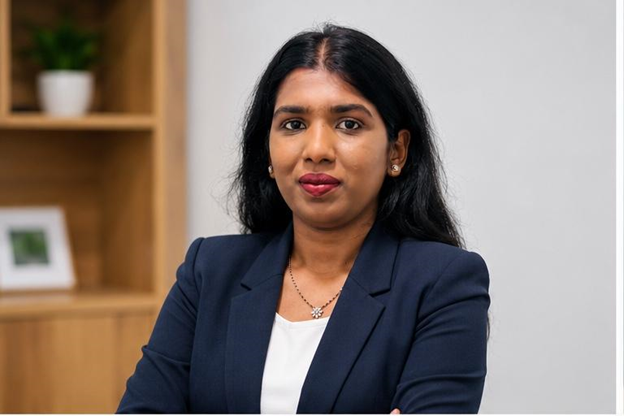
We sat down with Bhavitha to discuss her career journey, perspectives on enterprise data transformation, and the future of analytics.
Q: Can you tell us about your journey into the world of data and technology?
A: My journey began with a deep curiosity for systems and problem-solving during my undergraduate studies, where I earned a Bachelor's degree in Computer Science. Those years provided me with a solid foundation in algorithms, programming, software engineering, and systems design, which continue to shape my approach to solving complex technical challenges.
After moving to the United States, I pursued a Master's degree in Business Information Technology. The program was instrumental in bridging technical expertise with business strategy and leadership. Through coursework in Distributed Systems, Information Security Management, Enterprise Infrastructure, Financial Accounting, and Human Capital Management, I developed a broader perspective on how technology supports organizational objectives and long-term growth.
Over the years, I've worked across multiple industries, but healthcare data integration has been especially meaningful because of its potential to improve patient outcomes and support data-driven decision-making. Being able to contribute to projects that enhance healthcare operations while maintaining high standards of data quality and compliance has been incredibly rewarding.
Q: What are some of the key projects you've worked on recently?
A: One of the most significant initiatives I contributed to involved modernizing a large-scale healthcare data warehouse by consolidating multiple legacy systems into a centralized enterprise data platform. The project included designing and implementing scalable ETL pipelines that integrated claims, member, provider, and operational datasets into a unified architecture.
The enterprise transformation significantly improved reporting efficiency, reduced data duplication, strengthened data quality, and provided business users with a reliable single source of truth for analytics and decision-making.
I also contributed to automating enterprise batch processing workflows, helping reduce manual intervention while improving operational reliability and processing consistency. Another rewarding aspect of the project was collaborating closely with business analysts and stakeholders to develop intuitive dashboards that transformed complex datasets into actionable business insights.
Q: Data integration can be incredibly complex, especially in healthcare. What challenges have you faced?
A: Healthcare data integration presents unique challenges because organizations must manage diverse data sources, evolving regulatory requirements, and extremely high expectations for data accuracy and consistency. Integrating information from multiple systems while maintaining data integrity requires thoughtful architecture, strong governance, and continuous validation.
Processing large volumes of enterprise data also demands careful performance tuning, efficient job design, and ongoing monitoring. Data profiling and quality assessment have become essential components of ensuring reliable analytics and operational reporting.
Beyond the technical aspects, successful digital transformation also depends on effective change management. Building stakeholder confidence, encouraging adoption of new processes, and clearly communicating the business value of new technology solutions are just as important as implementing the underlying technology.
Q: How do your technical skills contribute to solving these challenges?
A: My experience spans enterprise ETL development, relational databases, scripting, workload automation, and business intelligence, allowing me to design scalable, reliable, and maintainable data integration solutions.
Working extensively with enterprise data warehouse technologies has strengthened my expertise in data modeling, SQL optimization, performance tuning, and large-scale data processing. I also leverage programming and scripting languages, including Python, Shell scripting, and SQL-based programming, to automate repetitive processes and improve operational efficiency.
In addition, my experience with enterprise scheduling and workload automation enables dependable execution of critical business processes with minimal operational overhead. When communicating insights to business users, I focus on developing intuitive dashboards and visualizations that help translate technical data into meaningful business outcomes.
Q: Tell us more about your academic background. How has it shaped your career?
A: My academic background has played a significant role in shaping both my technical expertise and professional mindset. Graduate studies provided an excellent balance between advanced technology concepts and business strategy, reinforcing the importance of aligning technology initiatives with organizational goals.
The experience also strengthened my communication, leadership, and cross-functional collaboration skills, which have become increasingly valuable throughout my career.
My undergraduate education established a strong foundation in computer science principles, software engineering, algorithms, and system architecture. Together, these educational experiences have prepared me to successfully contribute to complex enterprise data transformation initiatives.
Q: What do you consider your greatest professional strengths?
A: One of my greatest strengths is the ability to bridge technical complexity with business priorities. I enjoy translating sophisticated technical solutions into measurable business value through improved reporting capabilities, higher-quality data, greater operational efficiency, and stronger decision-making.
Another strength is my focus on automation and operational excellence. I believe well-designed automated processes reduce manual effort, improve consistency, and allow organizations to focus more on strategic initiatives.
Finally, I strongly believe in continuous learning. Technology evolves rapidly, and maintaining curiosity has helped me remain adaptable while continuously expanding my technical and leadership capabilities.
Q: What excites you most about working in data and analytics today?
A: Data and analytics continue to evolve at an incredible pace, creating opportunities to solve increasingly complex business challenges. What excites me most is the ability to generate meaningful impact through better information and smarter decision-making.
Within healthcare, data-driven insights have the potential to improve patient care, operational efficiency, and organizational outcomes. At the same time, advancements in artificial intelligence and machine learning are creating exciting opportunities for predictive analytics, real-time intelligence, and more personalized services.
Beyond healthcare, I believe modern data strategies will continue helping organizations become more agile, innovative, and customer-focused across virtually every industry.
Q: What advice would you give to aspiring data professionals?
A: My first piece of advice is to embrace continuous learning. New technologies, cloud platforms, AI capabilities, and data engineering practices continue to evolve, making lifelong learning essential.
Second, develop strong business acumen alongside technical expertise. Understanding how your work contributes to organizational objectives will make your technical solutions far more valuable.
Finally, invest in communication and collaboration skills. The most successful data professionals are those who can explain complex concepts clearly, build strong relationships with stakeholders, and work effectively across cross-functional teams.
Q: Looking forward, what are your aspirations and future goals?
A: I hope to continue leading enterprise data transformation initiatives while exploring emerging technologies in advanced analytics, artificial intelligence, and intelligent automation. My goal is to help organizations leverage data not only as an operational asset but also as a strategic resource for innovation and long-term growth.
Looking further ahead, I would like to mentor future technology professionals, build high-performing teams, and contribute to broader conversations around ethical data practices, accessibility, and responsible innovation.
About Bhavitha Guntupalli
Bhavitha Guntupalli is an information technology professional specializing in enterprise data integration, ETL development, data warehousing, and analytics. She has worked across healthcare, finance, and enterprise technology environments, helping organizations modernize data platforms and improve decision-making through scalable data solutions. She is passionate about building reliable data ecosystems that transform complex information into actionable insights, enabling organizations to make informed, data-driven decisions. She is based in Naperville, Illinois.
Media Contact:
Website: https://www.linkedin.com/in/bhavitha-g-982033220
Country: United States
Email: bhavithag.workspace98@gmail.com
SOURCE: Bhavitha Guntupalli
View the original press release on ACCESS Newswire