Introduction: The High Stakes of Global Sourcing
In the high-margin world of golf accessories, sourcing is often the "silent killer" of brands. A single shipment of sub-standard custom golf headcovers can ruin a seasonal launch, alienate your retail partners, and drain your marketing budget. For B2B buyers—ranging from corporate gift planners to pro-shop managers—reducing sourcing risk isn't just about saving money; it’s about protecting brand equity. This guide explores how to vet suppliers and build a resilient supply chain in the competitive golf industry.

Strategy 1: Beyond the "Gold Supplier" Badge
Many buyers rely solely on platform badges like "Gold Supplier" or "Verified." While helpful, these are entry-level filters. To truly reduce risk, you must verify the golf headcover manufacturer's physical capacity. Request a live video walkthrough of the production line during peak hours. Observe the age of the embroidery machines and the organization of the material warehouse. A factory in Dongguan, for instance, should demonstrate a clear workflow from digitization to final QC, proving they are a real factory and not a middleman with a laptop.

Strategy 2: The "Sample vs. Bulk" Quality Trap
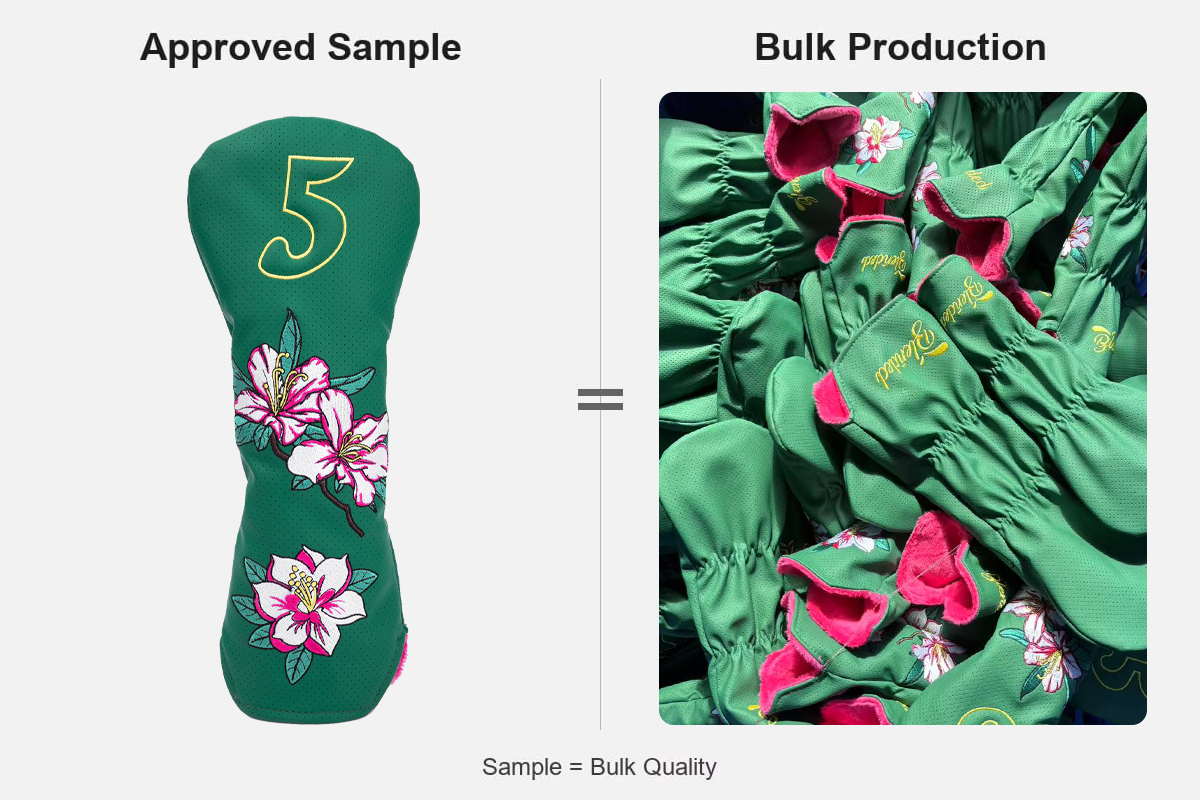
The most common risk is "Quality Drift"—where the golden sample looks perfect, but the bulk order arrives with thinner lining or lower-stitch-count embroidery. To mitigate this, define your quality standards in a written contract before the deposit is paid. Specify the weight of the plush putter cover lining and the exact type of PU leather. At JT Golf Factory, we encourage clients to retain an "original golden sample" to compare against the final shipment, ensuring accountability at every stage of the manufacturing process.
Strategy 3: Safeguarding Intellectual Property (IP)
For niche brands, your design is your most valuable asset. The risk of your custom artwork ending up on a competitor's shelf is real. Before sharing any tech packs, ensure your wholesale golf headcovers supplier signs a Non-Disclosure Agreement (NDA) or a more robust NNN agreement (Non-Use, Non-Disclosure, Non-Circumvention). This legal framework prevents the factory from using your proprietary molds or embroidery patterns to fulfill orders for other clients, securing your market exclusivity.
Strategy 4: Mitigating Lead-Time and Logistics Delays
Late shipments are often caused by poor sub-supplier management (e.g., waiting for custom yarn or specialized magnets). Reduce this risk by choosing an integrated golf accessories factory that keeps a buffer stock of common materials. Furthermore, clarify the "Incoterms" (FOB, DDP, or CIF) and the "Ship-By" date. A reliable partner will provide a weekly production update with photos, allowing you to spot potential bottlenecks before they turn into 2-week delays.
Strategy 5: Financial Security and Milestone Payments
Never pay 100% upfront to a new supplier. The standard B2B protocol for custom golf club covers is a 30% deposit to start production and 70% upon proof of completion (usually after a third-party inspection). Using Trade Assurance or LC (Letter of Credit) for large orders adds an extra layer of financial security. This structure ensures the manufacturer is incentivized to maintain quality and meet the agreed-upon deadline to unlock the final payment.
Conclusion: Building a Foundation of Trust
Risk cannot be eliminated, but it can be managed through transparency and professional standards. By vetting your custom golf headcover manufacturer with these five strategies, you move from a transactional relationship to a strategic partnership. Are you tired of sourcing headaches and inconsistent quality? Reach out to our team at JT Golf Factory today for a transparent consultation and a comprehensive risk-assessment for your next project.
Media Contact
Company Name: Dongguan JT Sporting Goods Co., Ltd.
Email: Send Email
Country: China
Website: https://www.jtgolffactory.com/