There is a particular kind of silence that only arrives when you are far enough from roads, far enough from reception, far enough from the steady hum of modern life that you begin to notice its absence as something physical. It is not emptiness. It is presence, dense, textured, and quietly insistent.
I remember the first time I felt it settle in, somewhere along a narrow trail that cut across a stretch of open land too uneven for vehicles and too remote to attract anything resembling a crowd. The horse beneath me slowed without instruction, adjusting its footing over loose stone, and in that small, deliberate shift, the rhythm of the day changed. Or perhaps it was my perception of it that changed.
Movement That Refuses Urgency
Travel, as we have come to know it, is often defined by acceleration. Even leisure has been optimized, compressed into itineraries, filtered through lenses, translated into content before it is fully experienced. But on horseback, none of that holds. Movement resists urgency. Distance reclaims its meaning.
It is within this slower, more attentive form of travel that platforms like Globetrotting have quietly built a following, not by promising spectacle, but by curating journeys that prioritize immersion over observation. What they offer is not simply access to remote landscapes, but a different way of entering them: guided not by convenience, but by the steady, interpretive intelligence of a horse.
The distinction matters more than it might initially seem.
The Intelligence of the Horse
On foot, you are limited by endurance. In a vehicle, you are insulated from the terrain. But on horseback, you exist in a kind of partnership that sits somewhere between the two. The horse reads the land continuously, registering shifts in ground texture, responding to gradients, sensing what lies just beyond your line of sight. You begin, over time, to trust these adjustments. To feel them not as corrections, but as communication.
There is no language for this exchange, at least not in the conventional sense. It unfolds through movement, through balance, through an awareness that is shared rather than spoken. A slight hesitation before crossing water. A subtle change in pace as the wind picks up. The quiet insistence of a path chosen not by you, but by an animal that understands it more intimately.
The Body as Part of the Landscape
That access is not always comfortable.
By midday, the physicality of riding makes itself known in ways that feel both demanding and clarifying. Muscles you rarely think about begin to ache. Your posture shifts constantly, responding to the horse’s movement. Your hands, lightly holding the reins, register every subtle change in direction or tension. It is a form of engagement that leaves little room for distraction.
And yet, it is precisely this immersion that sharpens perception.
The smell of rain arriving before the clouds fully gather. The dry, mineral scent of dust rising with each step. The rhythmic creak of saddle leather, steady and almost meditative. These are not details that demand attention; they simply become unavoidable in the absence of competing noise.
Time Measured in Sensation
Time, too, begins to behave differently.
Without the usual markers, notifications, schedules, the constant checking of hours, progress is measured in sensations rather than minutes. The length of a valley is understood through the gradual shift in light. Elevation is felt in the strain of muscles, in the horse’s breathing, in the subtle cooling of air as you climb.
Even rest takes on a different quality.
When you dismount, there is no immediate urge to fill the silence. The horses graze, heads low, entirely untroubled by the passage of time. The landscape remains unchanged by your presence. There is a kind of humility in this, a reminder that you are not at the center of the experience, but moving within something far larger and more enduring.
A Quiet Recalibration of Travel
This is perhaps what distinguishes slow travel at its most authentic.
It does not present itself as an escape, nor as a performance. There is nothing to optimize, nothing to curate. The value lies in the act of being there fully, of allowing the experience to unfold without the need to translate it into something else.
In an era where so much of travel has become oriented toward visibility, this kind of journey offers a quiet alternative. Not as a rejection of modern life, but as a recalibration of it. A reminder that not all meaningful experiences are designed to be shared in real time.
What Cannot Be Captured
Some experiences resist documentation entirely.
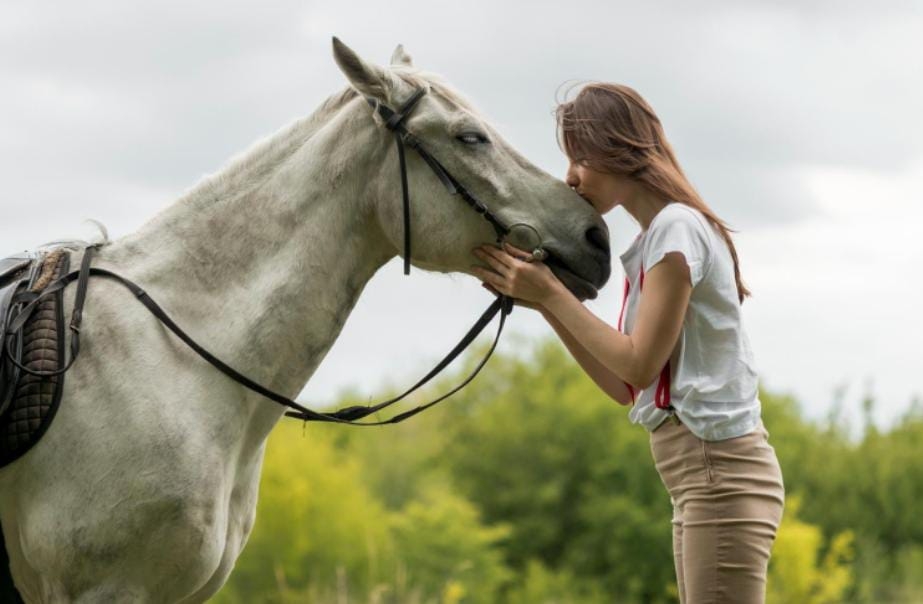
The bond between rider and horse, for instance, exists in a space that cannot be adequately captured. It is felt in micro-adjustments, in mutual responsiveness, in a trust that builds gradually and without spectacle. To reduce it to an image would be to miss its essence.
The same can be said of the terrain itself.
Seen from a distance, a landscape can appear static, even simplified. But to move through it slowly, at the pace of hooves, is to encounter its complexity in layers. The ground is uneven, alive with variation. The air shifts subtly with altitude. The horizon expands and contracts depending on where you stand.
These are not experiences that lend themselves easily to replication.
What Stays With You
By the end of such a journey, what remains is not a collection of highlights, but a series of impressions that feel almost physical in their persistence. The rhythm of movement. The weight of the day in your body. The quiet, steady presence of the horse.
These are the kinds of memories that do not translate neatly into content.
They stay where they were formed, somewhere between the landscape and the body, between motion and stillness. And in that space, they resist the logic of speed, of sharing, of simplification.
To travel this way is not to step outside the modern world entirely.
It is, perhaps, to remember that there are still ways of moving through it that cannot be accelerated. That cannot be simulated. That must be experienced as they are, slowly, attentively, and at the pace of hooves.
Media Contact
Company Name: globetrotting
Email: Send Email
Country: United States
Website: globetrotting.co