Global music entertainment company Warner Music Group (NASDAQ: WMG) announced better-than-expected revenue in Q2 CY2026, with sales up 10.3% year on year to $1.86 billion. Its GAAP profit of $0.38 per share was 13% above analysts’ consensus estimates.
Is now the time to buy Warner Music Group? Find out by accessing our full research report, it’s free.
Warner Music Group (WMG) Q2 CY2026 Highlights:
- Revenue: $1.86 billion vs analyst estimates of $1.80 billion (10.3% year-on-year growth, 3.8% beat)
- EPS (GAAP): $0.38 vs analyst estimates of $0.34 (13% beat)
- Adjusted EBITDA: $433 million vs analyst estimates of $411.3 million (23.2% margin, 5.3% beat)
- Operating Margin: 16.4%, up from 10% in the same quarter last year
- Free Cash Flow Margin: 6.1%, up from 0.4% in the same quarter last year
- Market Capitalization: $13.46 billion
Company Overview
Launching the careers of legendary artists like Frank Sinatra, Warner Music Group (NASDAQ: WMG) is a music company managing a diverse portfolio of artists, recordings, and music publishing services worldwide.
Revenue Growth
Examining a company’s long-term performance can provide clues about its quality. Any business can put up a good quarter or two, but many enduring ones grow for years. Over the last five years, Warner Music Group grew its sales at a weak 7.7% compounded annual growth rate. This was below our standard for the consumer discretionary sector and is a rough starting point for our analysis.
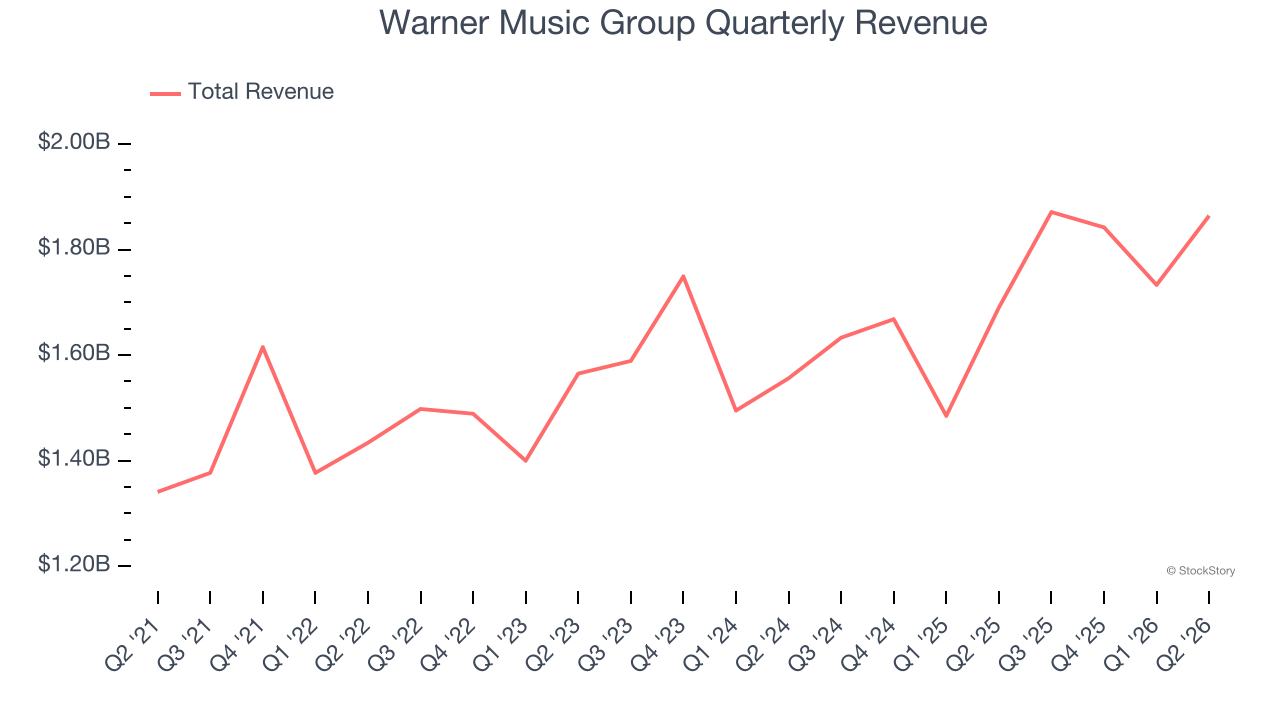
Long-term growth is the most important, but within consumer discretionary, product cycles are short and revenue can be hit-driven due to rapidly changing trends and consumer preferences. Warner Music Group’s annualized revenue growth of 7% over the last two years aligns with its five-year trend, suggesting its demand was consistently weak. 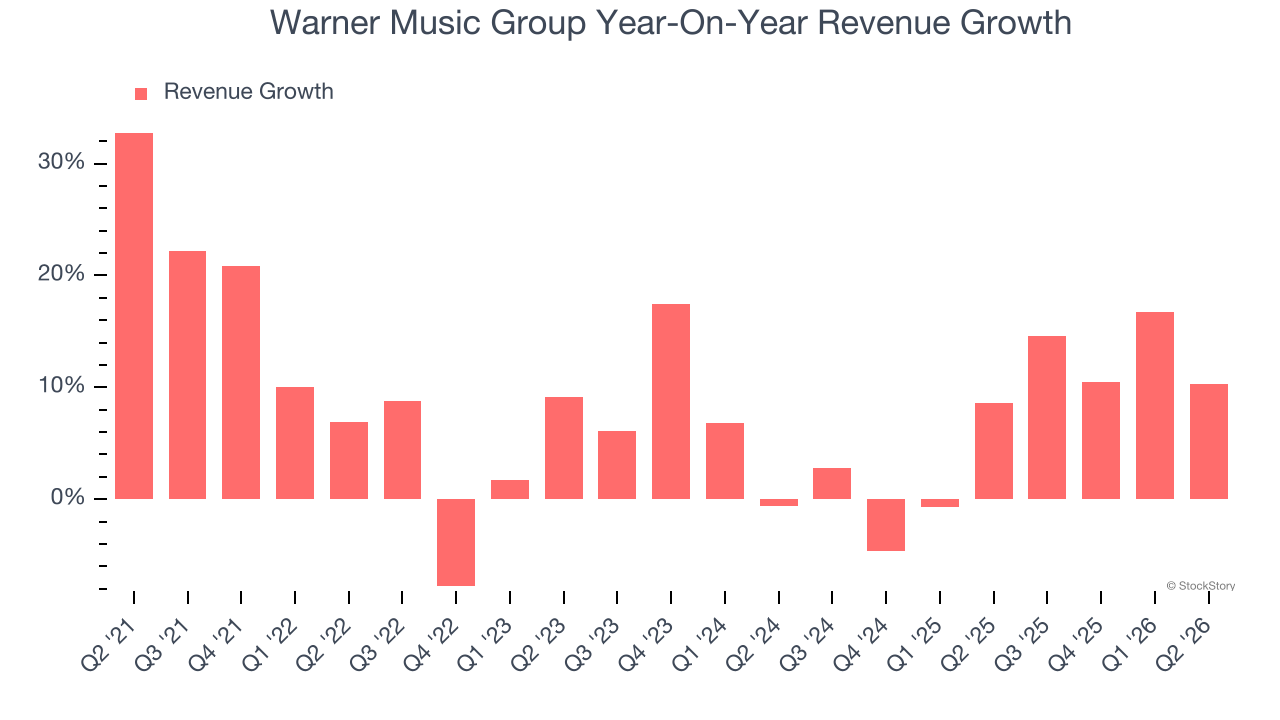
We can better understand the company’s revenue dynamics by analyzing its most important segments, Recorded Music and Music Publishing, which are 79.8% and 20.2% of revenue. Over the last two years, Warner Music Group’s Recorded Music revenue (new music production) averaged 2.3% year-on-year growth while its Music Publishing revenue (royalties from catalog music) averaged 2.9% growth. 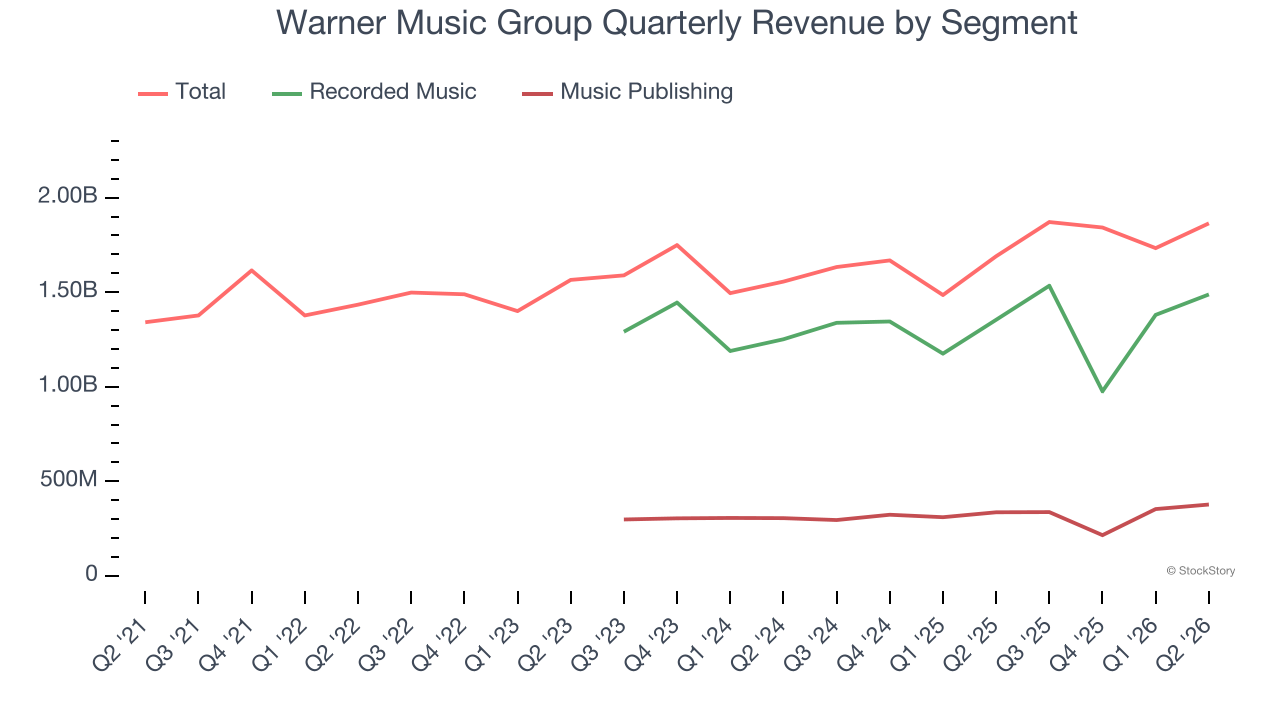
This quarter, Warner Music Group reported year-on-year revenue growth of 10.3%, and its $1.86 billion of revenue exceeded Wall Street’s estimates by 3.8%.
Looking ahead, sell-side analysts expect revenue to grow 4% over the next 12 months, a deceleration versus the last two years. This projection is underwhelming and suggests its products and services will see some demand headwinds.
ONE MORE THING: The $21 AI Application Stock Wall Street Forgot. While Wall Street obsesses over who’s building AI, one company is already using it to print money. And nobody’s paying attention.
AI chip stocks trade at ridiculous valuations. This company processes a trillion consumer signals monthly using AI and trades at a third of the price. The gap won’t last. The institutions will figure it out. You need to see this first. Read the FREE Report Before They Notice.
Operating Margin
Operating margin is a key measure of profitability. Think of it as net income - the bottom line - excluding the impact of taxes and interest on debt, which are less connected to business fundamentals.
Warner Music Group’s operating margin has risen over the last 12 months and averaged 12.3% over the last two years. The company’s higher efficiency is a breath of fresh air, but its suboptimal cost structure means it still sports inadequate profitability for a consumer discretionary business.
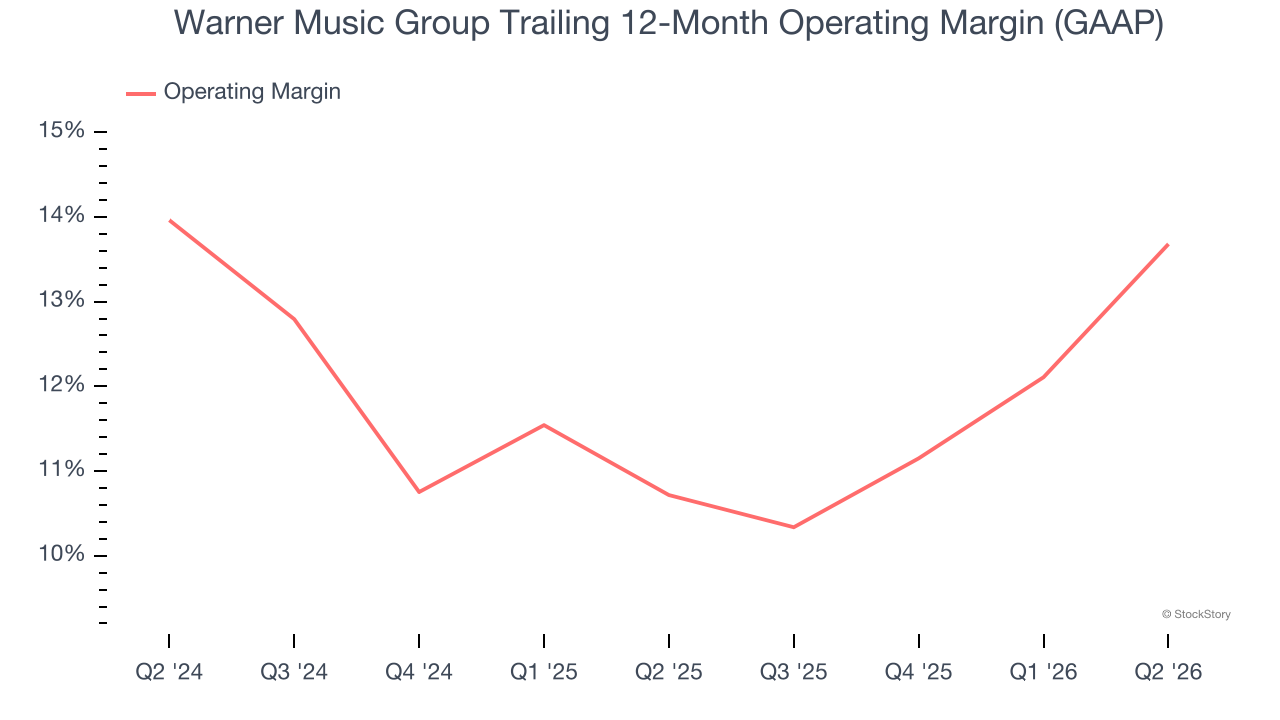
In Q2, Warner Music Group generated an operating margin profit margin of 16.4%, up 6.4 percentage points year on year. This increase was a welcome development and shows it was more efficient.
Earnings Per Share
Revenue trends explain a company’s historical growth, but the long-term change in earnings per share (EPS) points to the profitability of that growth — for example, a company could inflate its sales through excessive spending on advertising and promotions.
Warner Music Group’s EPS grew at 18.9% compounded annual growth rate over the last five years. On the bright side, this performance was better than its 7.7% annualized revenue growth and tells us the company became more profitable on a per-share basis as it expanded.
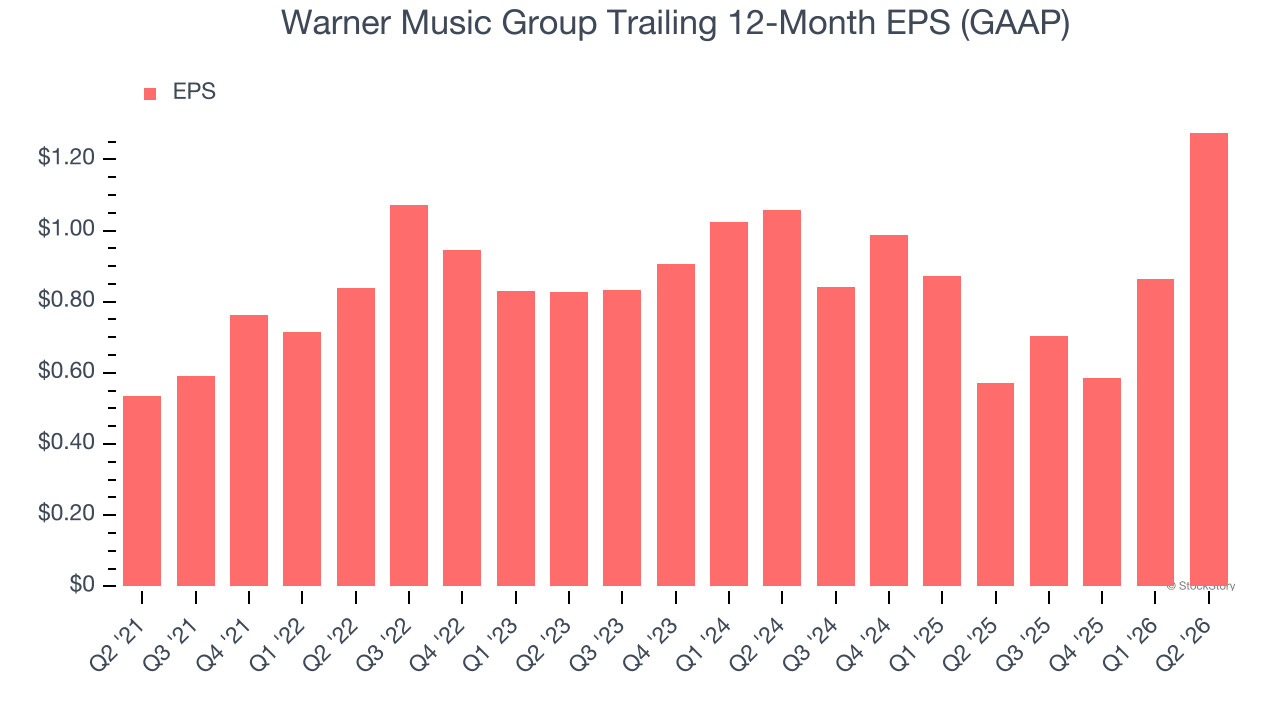
In Q2, Warner Music Group reported EPS of $0.38, up from negative $0.03 in the same quarter last year. This print easily cleared analysts’ estimates, and shareholders should be content with the results. Over the next 12 months, Wall Street expects Warner Music Group’s full-year EPS to grow 30.2% from $1.28 to $1.66.
Key Takeaways from Warner Music Group’s Q2 Results
It was encouraging to see Warner Music Group beat analysts’ revenue expectations this quarter. We were also glad its EPS outperformed Wall Street’s estimates. Overall, we think this was a solid quarter with some key areas of upside. The stock remained flat at $26.10 immediately following the results.
Sure, Warner Music Group had a solid quarter, but if we look at the bigger picture, is this stock a buy? The latest quarter does matter, but not nearly as much as longer-term fundamentals and valuation, when deciding if the stock is a buy. We cover that in our actionable full research report which you can read here (it’s free).