Dialysis provider DaVita Inc. (NYSE: DVA) announced better-than-expected revenue in Q2 CY2026, with sales up 5.2% year on year to $3.55 billion. Its non-GAAP profit of $4.02 per share was 3.6% above analysts’ consensus estimates.
Is now the time to buy DaVita? Find out by accessing our full research report, it’s free.
DaVita (DVA) Q2 CY2026 Highlights:
- Revenue: $3.55 billion vs analyst estimates of $3.50 billion (5.2% year-on-year growth, 1.7% beat)
- Adjusted EPS: $4.02 vs analyst estimates of $3.88 (3.6% beat)
- Management reiterated its full-year Adjusted EPS guidance of $14.65 at the midpoint
- Operating Margin: 16.3%, in line with the same quarter last year
- Free Cash Flow Margin: 7.2%, up from 6% in the same quarter last year
- Sales Volumes were flat year on year (-1.1% in the same quarter last year)
- Market Capitalization: $15 billion
Company Overview
With over 2,600 dialysis centers across the United States and a presence in 13 countries, DaVita (NYSE: DVA) operates a network of dialysis centers providing treatment and care for patients with chronic kidney disease and end-stage kidney disease.
Revenue Growth
A company’s long-term sales performance can indicate its overall quality. Any business can put up a good quarter or two, but the best consistently grow over the long haul. Unfortunately, DaVita’s 3.9% annualized revenue growth over the last five years was tepid. This was below our standard for the healthcare sector and is a poor baseline for our analysis.
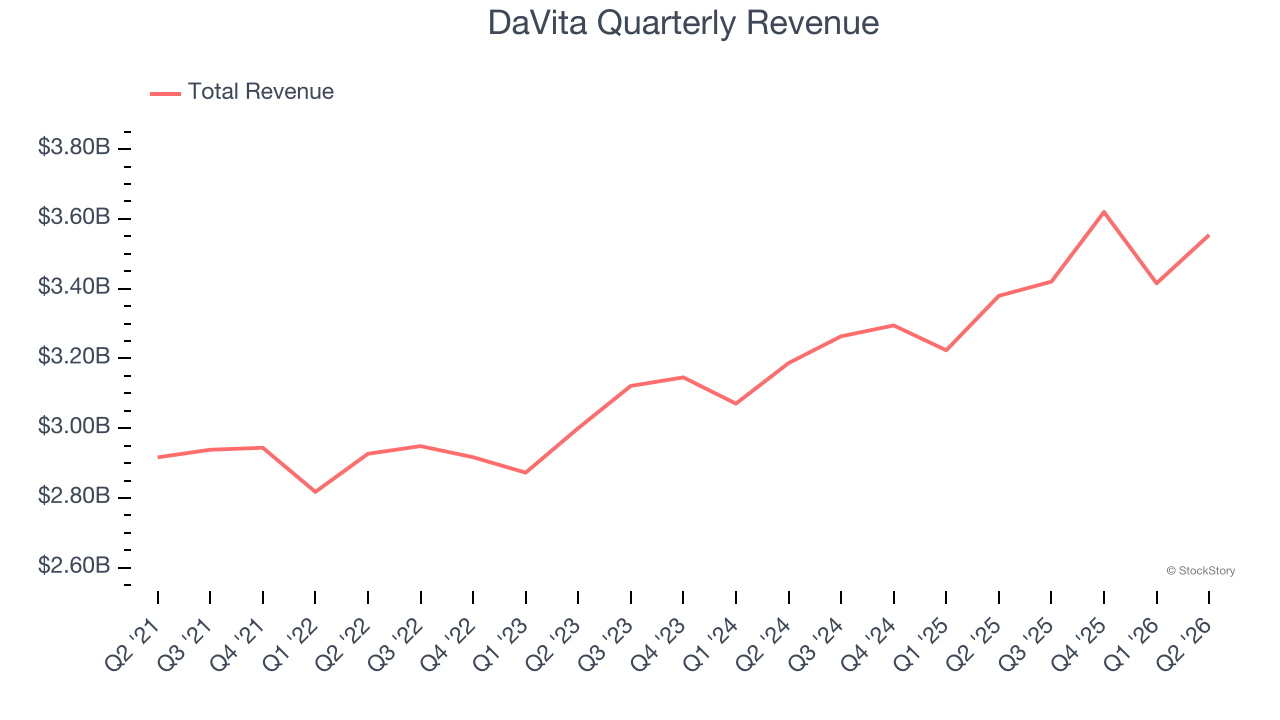
Long-term growth is the most important, but within healthcare, a half-decade historical view may miss new innovations or demand cycles. DaVita’s annualized revenue growth of 5.8% over the last two years is above its five-year trend, which is encouraging. 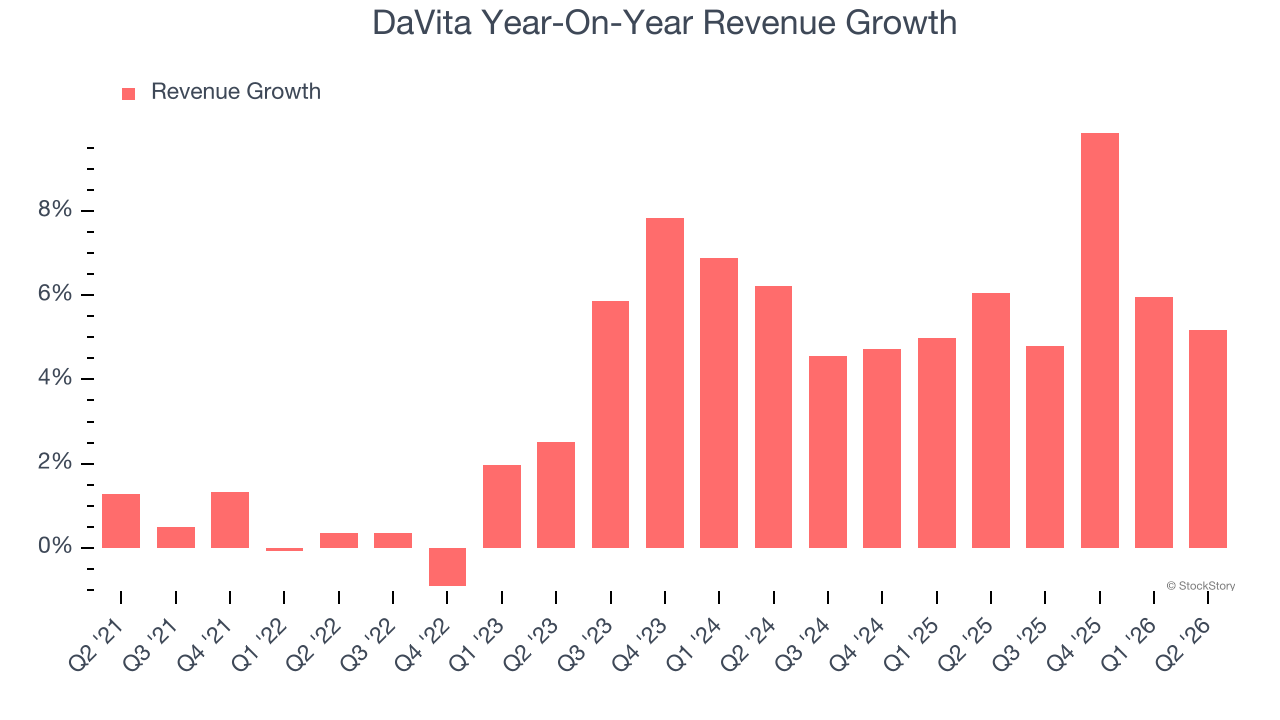
We can dig further into the company’s revenue dynamics by analyzing its number of treatments, which reached 7.23 million in the latest quarter. Over the last two years, DaVita’s treatments were flat. Because this number is lower than its revenue growth, we can see the company benefited from price increases. 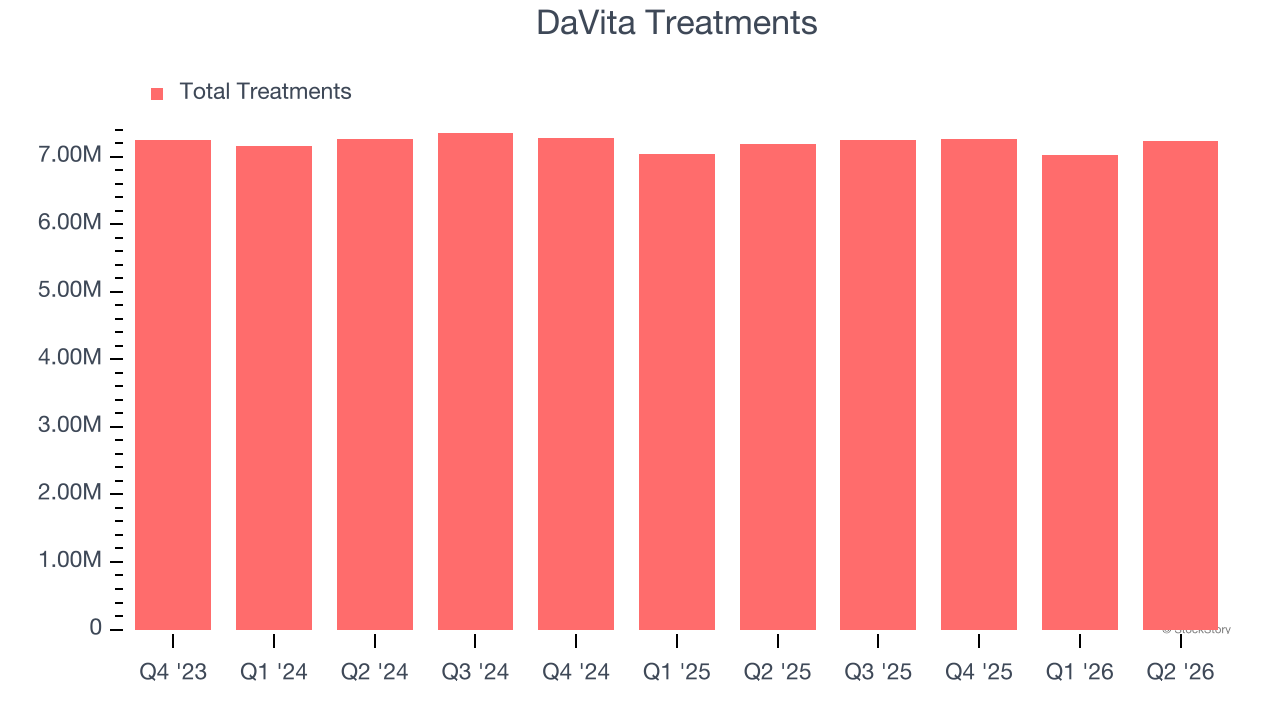
This quarter, DaVita reported year-on-year revenue growth of 5.2%, and its $3.55 billion of revenue exceeded Wall Street’s estimates by 1.7%.
Looking ahead, sell-side analysts expect revenue to grow 2.1% over the next 12 months, a deceleration versus the last two years. This projection is underwhelming and indicates its products and services will face some demand challenges.
WHILE YOU’RE HERE: The Next Palantir? One satellite company captures images of every point on Earth. Every single day. The Pentagon wants it. Hedge funds are using it to beat earnings. You’ve probably never heard of it.
This is what the early days of Palantir looked like before it became a giant. Same playbook. Different technology. If you missed Palantir, you need to see this. Claim The Stock Ticker for Free HERE.
Adjusted Operating Margin
Adjusted operating margin is a key measure of profitability. Think of it as net income (the bottom line) excluding the impact of non-recurring expenses, taxes, and interest on debt - metrics less connected to business fundamentals.
DaVita has done a decent job managing its cost base over the last five years. The company has produced an average adjusted operating margin of 14.6%, higher than the broader healthcare sector.
Analyzing the trend in its profitability, DaVita’s adjusted operating margin rose by 1.4 percentage points over the last five years, as its sales growth gave it operating leverage.
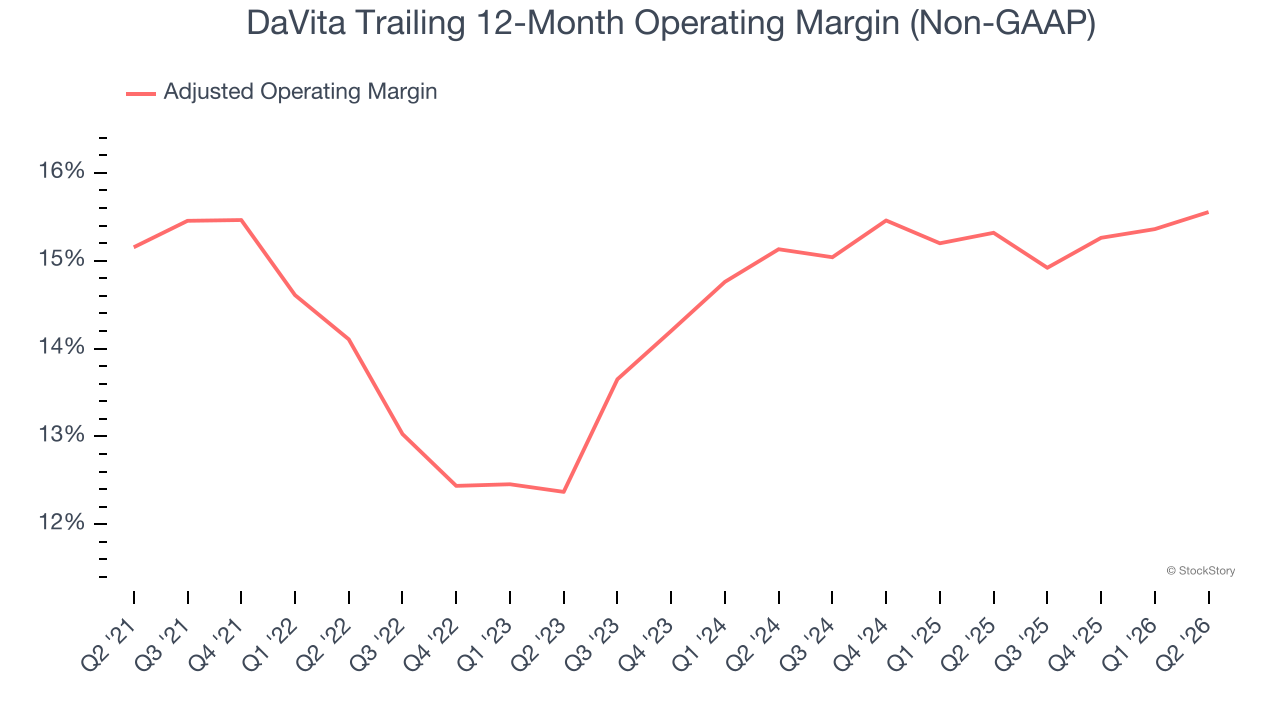
In Q2, DaVita generated an adjusted operating margin profit margin of 17%, in line with the same quarter last year. This indicates the company’s overall cost structure has been relatively stable.
Earnings Per Share
We track the long-term change in earnings per share (EPS) for the same reason as long-term revenue growth. Compared to revenue, however, EPS highlights whether a company’s growth is profitable.
DaVita’s EPS grew at 9.3% compounded annual growth rate over the last five years, higher than its 3.9% annualized revenue growth. This tells us the company became more profitable on a per-share basis as it expanded.
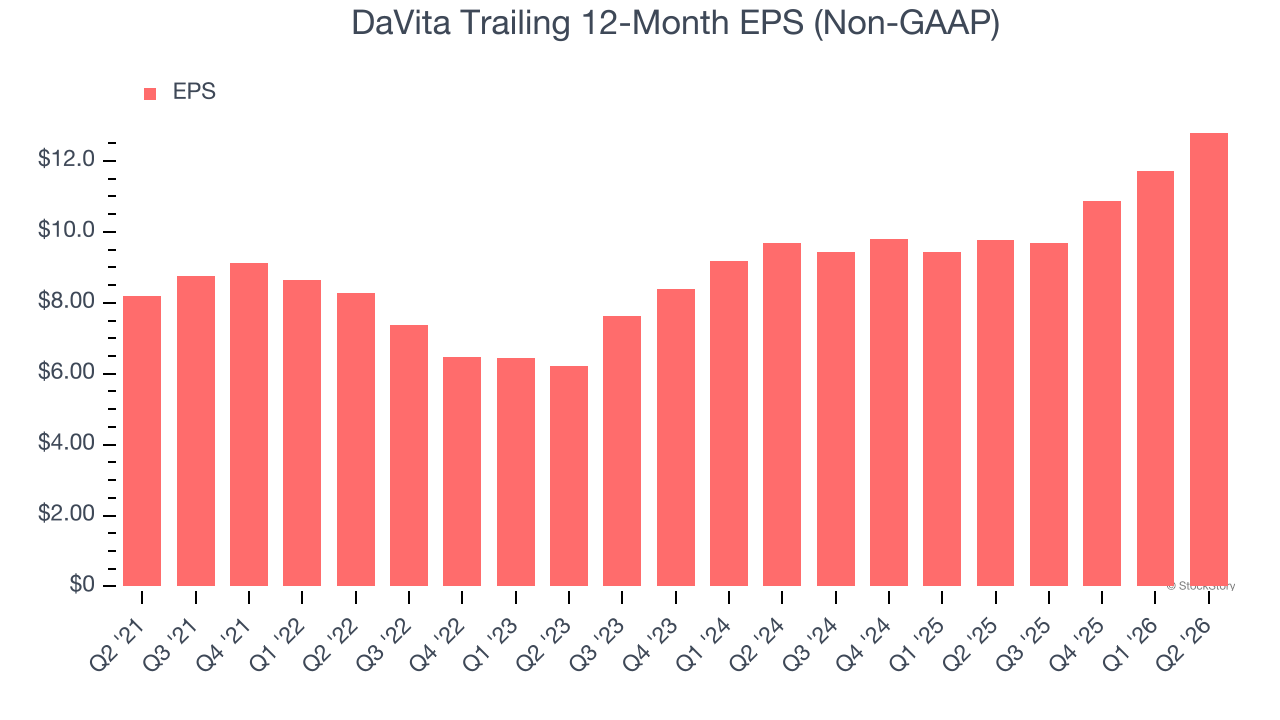
We can take a deeper look into DaVita’s earnings to better understand the drivers of its performance. As we mentioned earlier, DaVita’s adjusted operating margin was flat this quarter but expanded by 1.4 percentage points over the last five years. On top of that, its share count shrank by 40.7%. These are positive signs for shareholders because improving profitability and share buybacks turbocharge EPS growth relative to revenue growth. 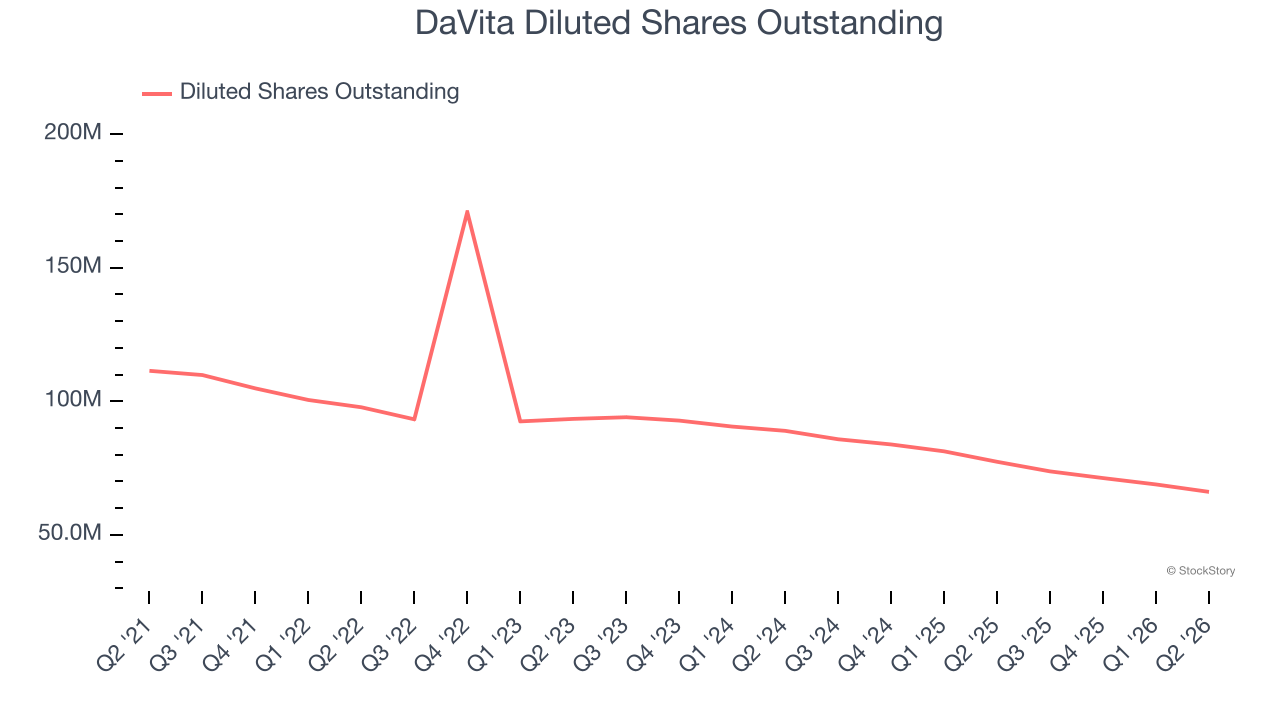
In Q2, DaVita reported adjusted EPS of $4.02, up from $2.95 in the same quarter last year. This print beat analysts’ estimates by 3.6%. Over the next 12 months, Wall Street expects DaVita’s full-year EPS to grow 24% from $12.80 to $15.88.
Key Takeaways from DaVita’s Q2 Results
It was encouraging to see DaVita beat analysts’ revenue expectations this quarter. We were also glad its EPS outperformed Wall Street’s estimates. On the other hand, its full-year EPS guidance missed. Overall, this was a softer quarter. The stock traded down 9.8% to $210.75 immediately after reporting.
So should you invest in DaVita right now? We think that the latest quarter is only one piece of the longer-term business quality puzzle. Quality, when combined with valuation, can help determine if the stock is a buy. We cover that in our actionable full research report which you can read here (it’s free).