Mortgage insurance provider Radian Group (NYSE: RDN) met Wall Street’s revenue expectations in Q3 2026, with revenue up 107% year on year to $624.1 million. Its non-GAAP profit of $1.44 per share was 18.9% above analysts’ consensus estimates.
For more on Radian Group, read our free full research report.
Radian Group (RDN) Q3 2026 highlights:
- Net premiums earned $548.3 million (131% year-on-year growth)
- Revenue $624.1 million vs S&P analysts’ consensus estimates of $624.4 million (107% year-on-year growth, in line)
- Pre-tax profit $228.3 million (36.6% margin)
- Adjusted EPS $1.44 vs S&P analysts’ consensus estimates of $1.21 (18.9% beat)
- Book value per share $35.78 (4.2% year-on-year growth)
- Market capitalization $4.74 billion
“Radian delivered an excellent third quarter, with strong contributions from both our Mortgage Insurance and Specialty Insurance businesses. Total revenue more than doubled year-over-year with the addition of Inigo, and the strategic rationale for the acquisition is already showing up in our results,” said Radian CEO Mike Weinbach. “With two strong insurance businesses, disciplined underwriting, and significant financial flexibility, we’re focused on executing and creating long-term value for shareholders.”
Revenue growth
Insurance companies generate revenue three ways. The first is the core insurance business itself, represented in the income statement as premiums earned. The second source is investment income from investing the “float” (premiums collected but not yet paid out as claims) in assets such as fixed-income assets and equities. The third is fees from policy administration, annuities and other value-added services. Radian Group’s 8.3% annualized revenue growth over the last five years was decent. Its growth was slightly above the average for insurance companies and shows its offerings resonate with customers.
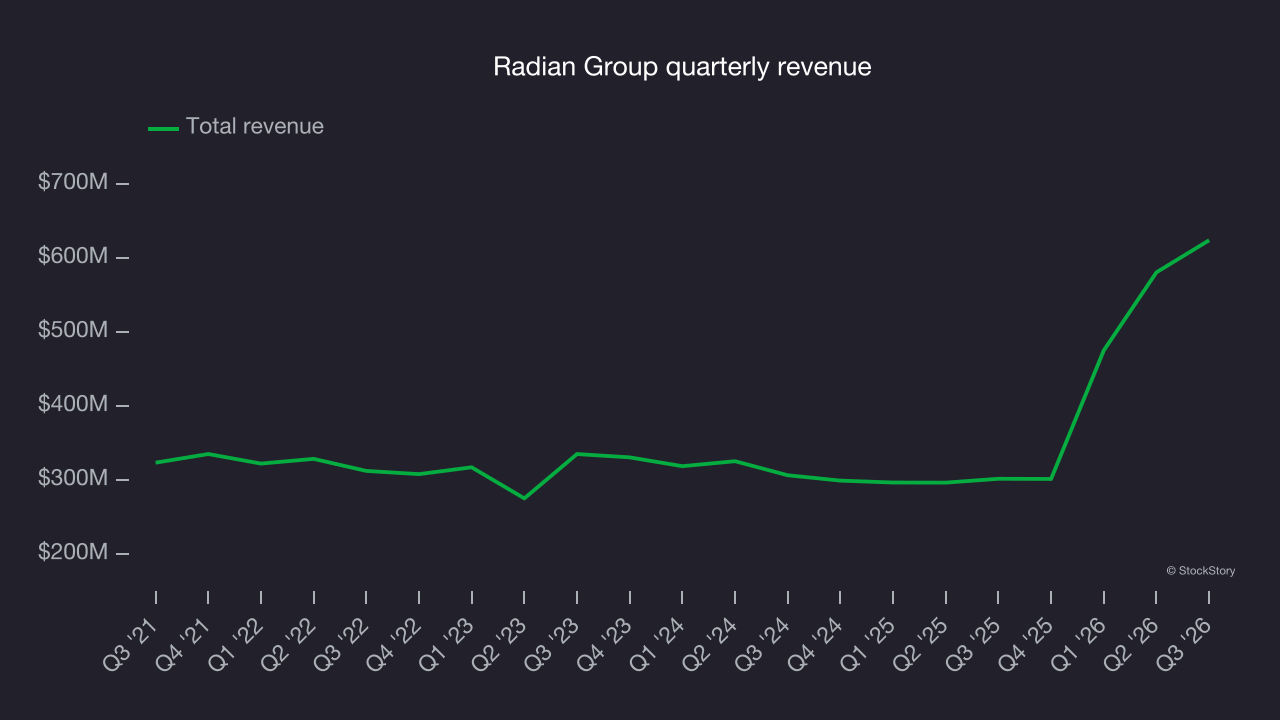
Long-term growth is the most important, but within financials, a half-decade historical view may miss recent interest rate changes and market returns. Radian Group’s annualized revenue growth of 24.3% over the last two years is above its five-year trend, suggesting its demand recently accelerated. 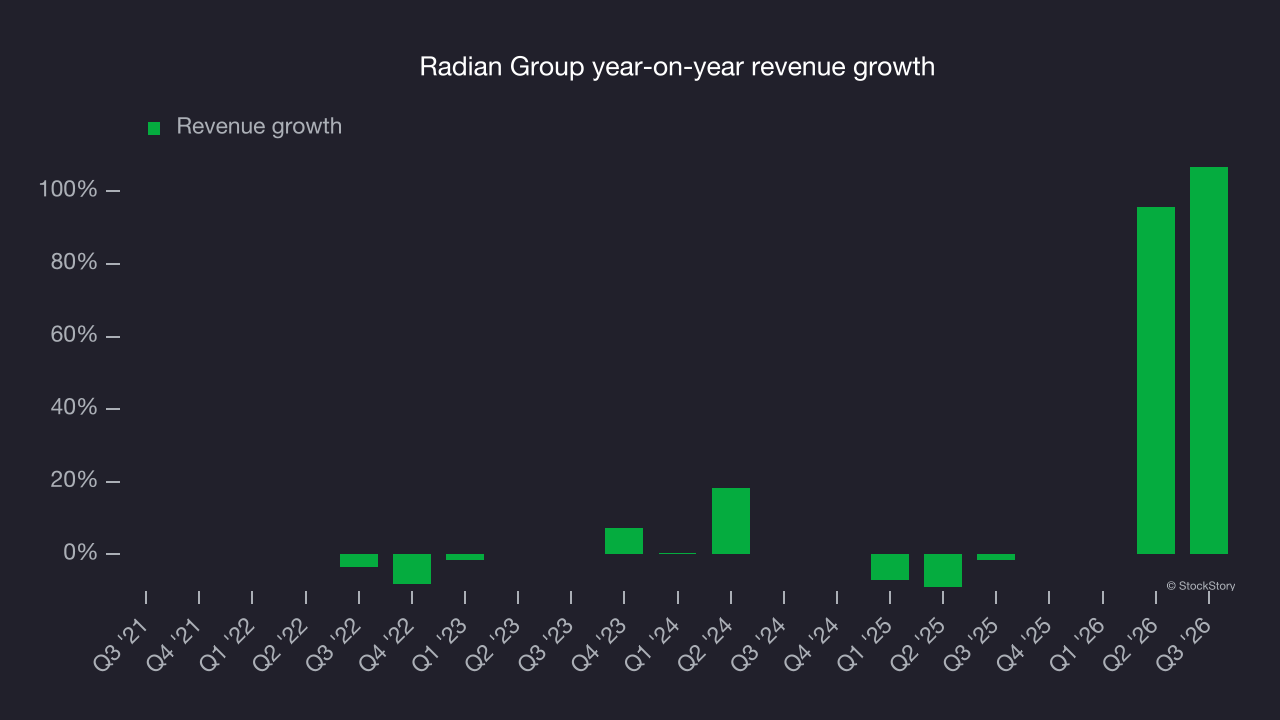 Note: Quarters not shown were determined to be outliers because they were impacted by outsized investment gains/losses that are not indicative of the recurring fundamentals of the business.
This quarter, Radian Group’s year-on-year revenue growth of 107% was strong, and its $624.1 million in revenue was in line with Wall Street’s consensus estimates.
Net premiums earned made up 78% of the company’s total revenue during the last five years, meaning insurance operations are Radian Group’s largest source of revenue.
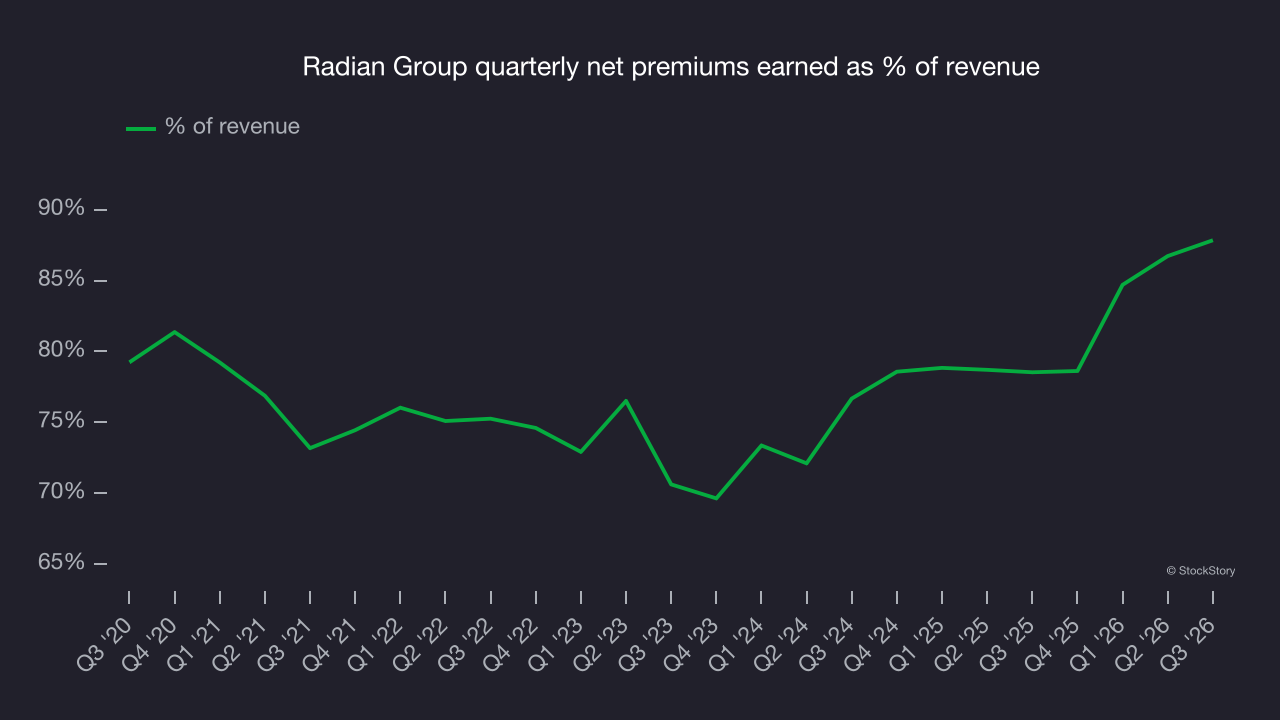
While insurers generate revenue from multiple sources, investors view net premiums earned as the cornerstone – their direct link to core operations stands in sharp contrast to the unpredictability of investment returns and fees.
Book value per share (BVPS)
Insurers are balance sheet businesses, collecting premiums upfront and paying out claims over time. Premiums collected but not yet paid out, often referred to as the float, are invested and create an asset base supported by a liability structure. Book value per share, or BVPS, captures this dynamic by measuring these assets (investment portfolio, cash and reinsurance recoverables) less liabilities (claim reserves, debt and future policy benefits). BVPS is essentially the residual value for shareholders.
BVPS is therefore a key metric to track for insurers and sheds light on business quality because it reflects long-term capital growth and is harder to manipulate than more commonly used metrics like EPS.
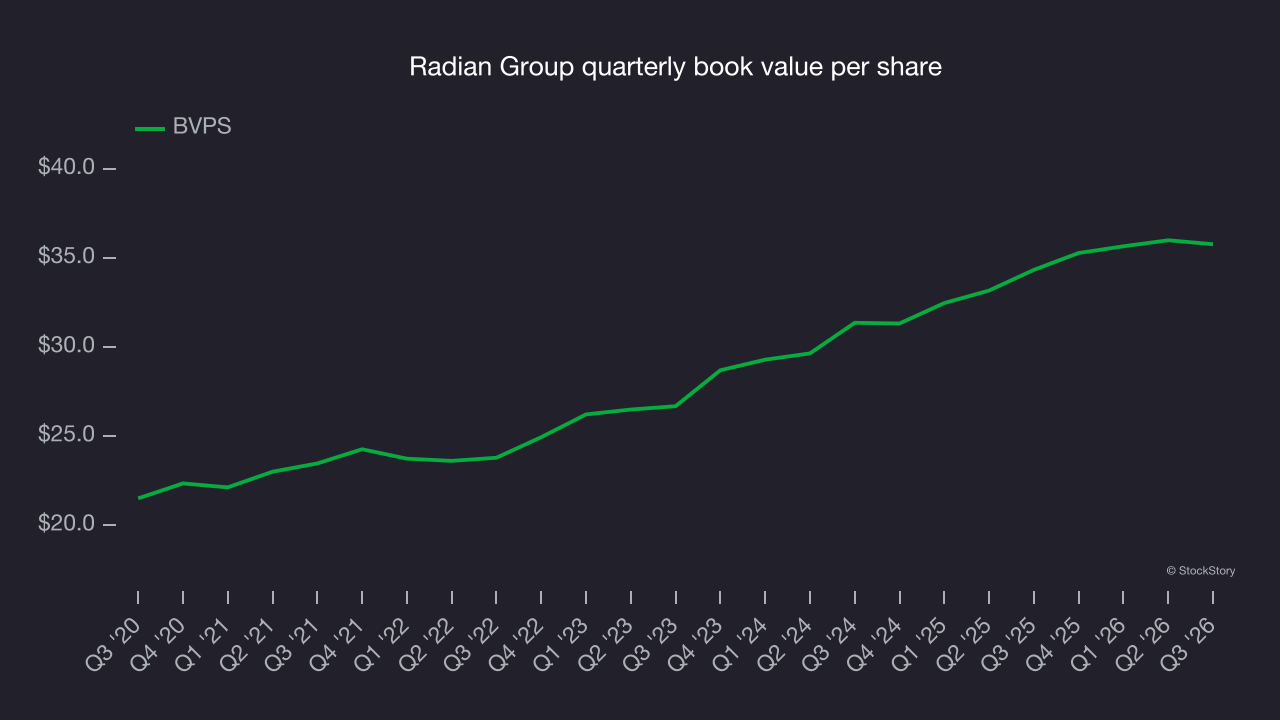
Radian Group’s BVPS grew at a decent 8.8% annual rate over the last five years. However, BVPS growth has recently slowed slightly to an annual rate of 6.8% over the last two years (from $31.37 to $35.78 per share).
Key takeaways from Radian Group’s Q3 results
Radian Group’s Q3 had some important positives, including EPS that topped analysts’ consensus estimates. Shares rose 4.4% to $38.20 immediately after the results.
Radian Group had a solid quarterly earnings result, but is the stock a good investment? When making that decision, it’s important to consider its valuation, business quality and latest quarterly results. For more on Radian Group, read our full research report here (it’s free).