Workforce housing company Target Hospitality (NASDAQ: TH) reported Q3 2026 results beating Wall Street’s revenue expectations, with revenue up 29.9% year on year to $129.1 million. The company expects full-year revenue to be around $440 million, close to analysts’ consensus estimates. Its GAAP loss of $0.09 per share was significantly below analysts’ consensus estimates.
For more on Target Hospitality, read the full research report for free.
Target Hospitality (TH) Q3 2026 highlights:
- Revenue $129.1 million vs analysts' consensus estimates of $118.9 million, according to S&P (29.9% year-on-year growth, 8.6% beat)
- EPS (GAAP) -$0.09 vs analysts' consensus estimates of $0 (significant miss)
- Adjusted EBITDA $34.22 million vs analysts' consensus estimates of $28.51 million (26.5% margin, 20% beat)
- Revenue guidance The company lifted its revenue guidance for the full year to $440 million at the midpoint from $415 million, a 6% increase
- EBITDA guidance $110 million at the midpoint for the full year, in line with analysts' consensus estimates
- Operating margin 2.3%, up from 0.1% in the same quarter last year
- Free cash flow margin 31.3%, down from 37.4% in the same quarter last year
- Utilized beds increased by 5,767 year on year
- Market capitalization $1.13 billion
"For customers developing data centers, power generation facilities and other critical infrastructure, attracting and retaining skilled workers is essential to project success. Our vertically integrated, scalable Target Hyper/Scale platform and speed-to-market capabilities differentiate us as a preferred sole-source partner. As adoption grows, we see meaningful potential to expand into value-added adjacencies and capture a greater share of our customers' total development spend. These advantages underpin the deepest commercial pipeline in our history, with advanced discussions underway on multiple large-scale industrial projects. With a diversified contract portfolio and meaningful financial flexibility, we believe Target is uniquely positioned to capitalize on a multi-decade critical infrastructure build-out. We are firmly committed to converting that opportunity into compounding growth and long-term shareholder value," concluded Mr. Archer.
Revenue growth
Examining a company’s long-term performance can provide clues about its quality. Any business can have short-term success, but a top-tier one grows for years. Target Hospitality’s revenue grew at a weak 7.6% annualized rate over the last five years, falling short of the consumer discretionary sector standard.
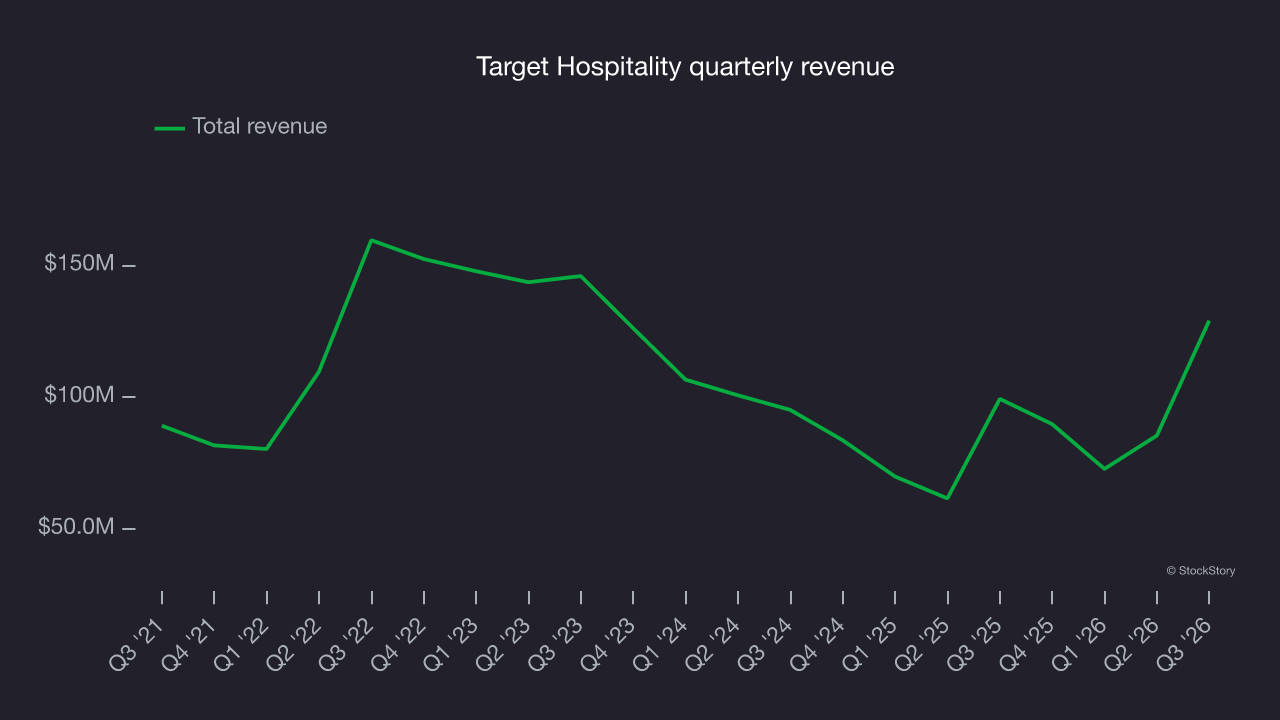
Long-term growth matters most, but within consumer discretionary, a stretched historical view may miss a company riding a successful new property or trend. Target Hospitality’s performance shows it grew in the past but relinquished its gains over the last two years, as its revenue fell by 6.2% annually. 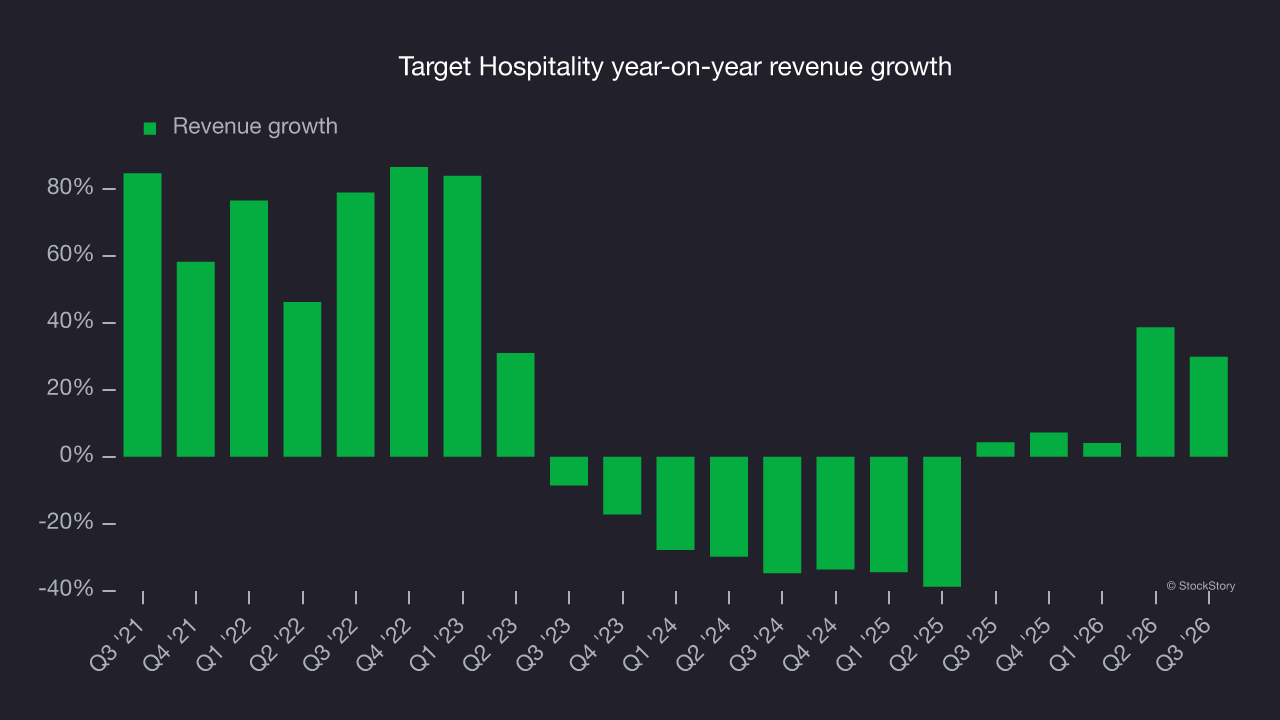
Another measure of the company’s revenue dynamics is its number of utilized beds, which reached 13,879 in the latest quarter. Over the last two years, Target Hospitality’s utilized beds averaged 3% year-on-year declines. This metric outpaced revenue growth during the same period, indicating that the company’s monetization has fallen. 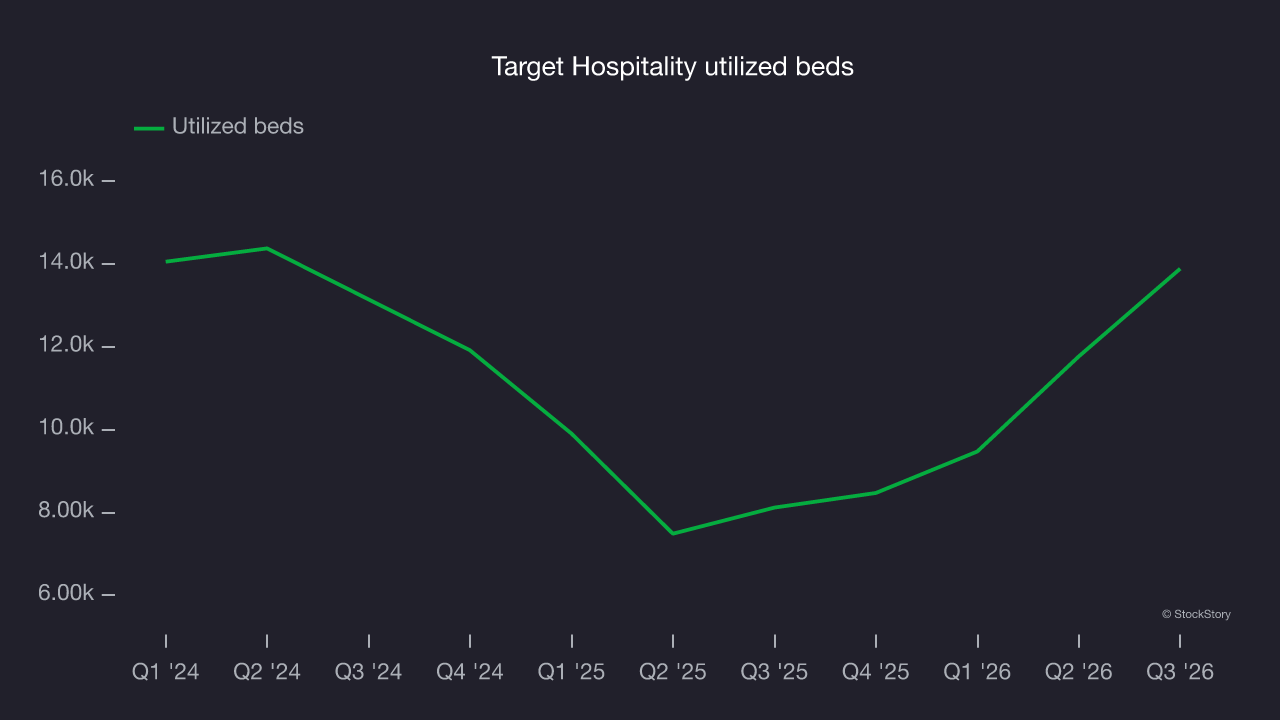
This quarter, Target Hospitality reported strong year-on-year revenue growth of 29.9%, and its $129.1 million of revenue topped Wall Street’s consensus estimates by 8.6%.
Looking ahead, sell-side analysts expect revenue to grow 90.6% over the next 12 months, according to S&P, an improvement versus the last two years. This strong projection implies its newer products and services will drive better revenue performance.
Operating margin
Operating margin is an important measure of profitability as it shows the portion of revenue left after accounting for all core expenses, from the cost of goods sold to advertising and wages. It’s also useful for comparing profitability across companies with different levels of debt and tax rates because it excludes interest and taxes.
Target Hospitality’s operating margin has been trending down over the last 12 months and averaged negative 4.7% over the last two years. Unprofitable consumer discretionary companies with falling margins deserve extra scrutiny because they’re spending heavily to stay relevant, an unsustainable practice.
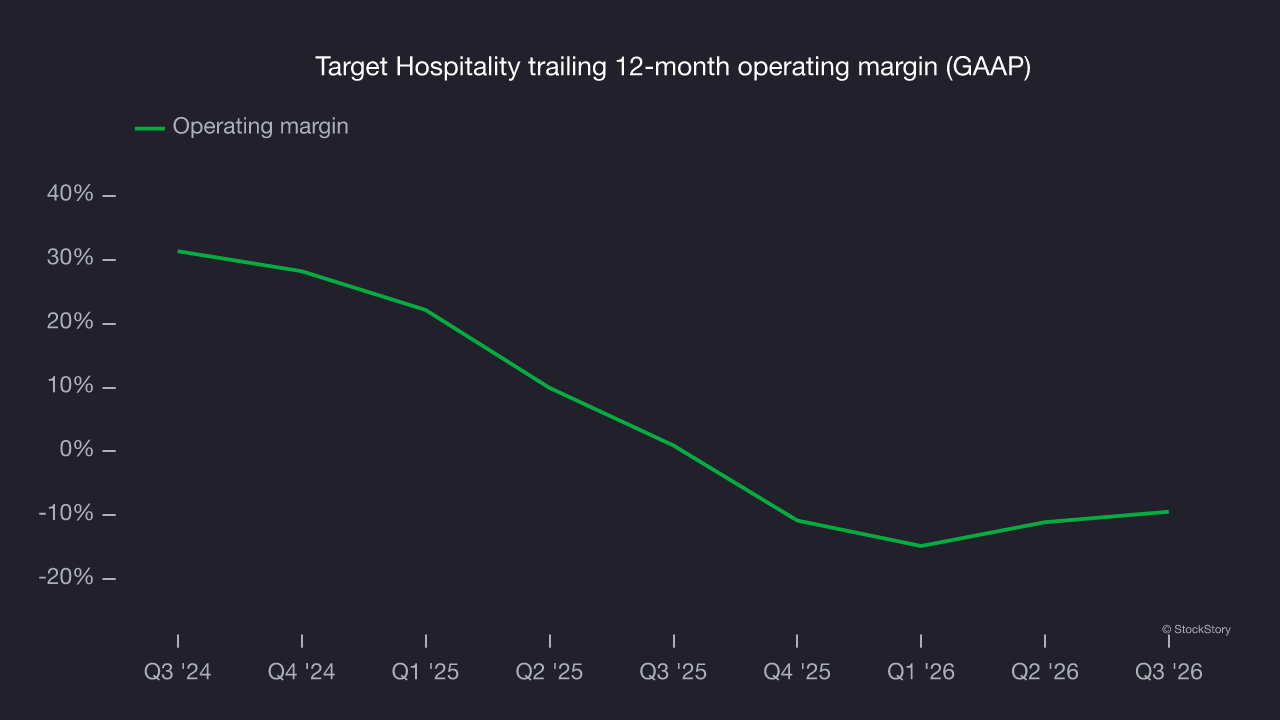
In Q3, Target Hospitality generated an operating profit margin of 2.3%, up 2.2 percentage points year on year. This was a positive development and shows it was more efficient.
Earnings per share
Revenue trends explain a company’s historical growth, but the long-term change in earnings per share, or EPS, points to the profitability of that growth. For example, a company could inflate its revenue through excessive spending on advertising and promotions.
Target Hospitality’s losses deepened over the last five years as its EPS dropped 21.4% annually. Companies with falling EPS warrant caution, as diminishing earnings could imply changing secular trends and preferences. Consumer discretionary companies are particularly exposed to this, and if those trends shift unexpectedly, Target Hospitality’s low margin of safety could leave its stock price susceptible to large declines.
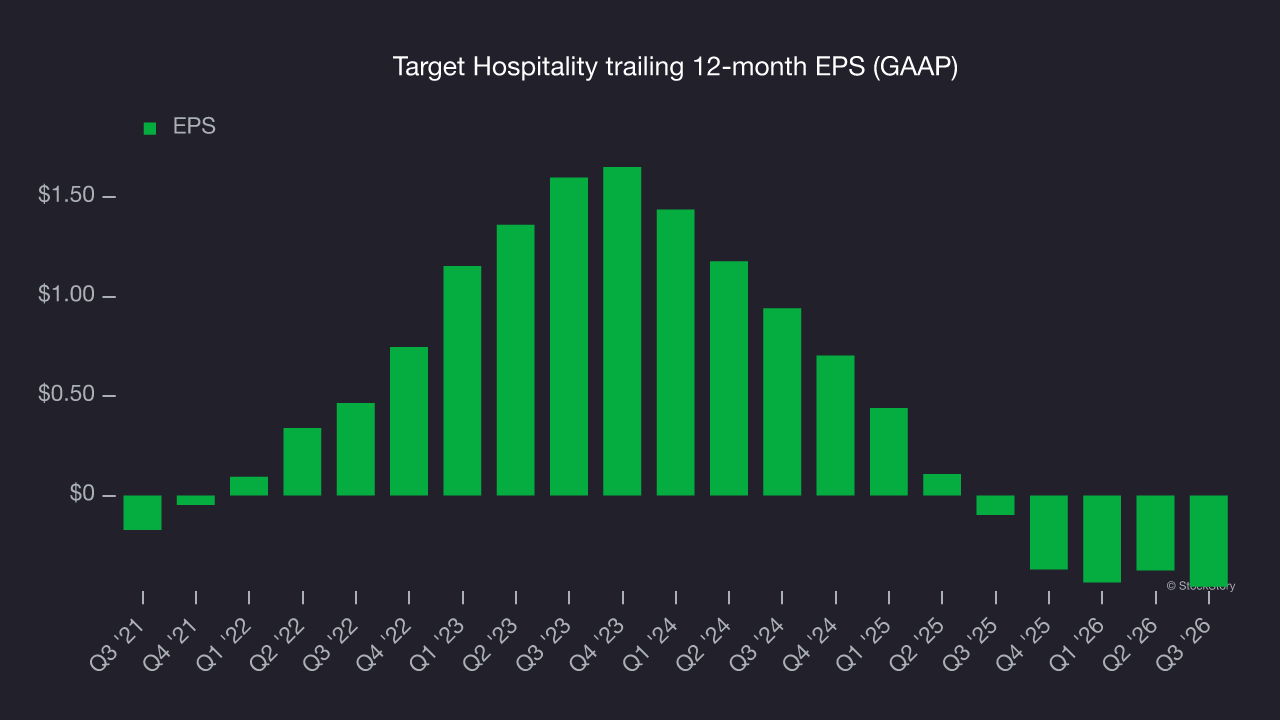
In Q3, Target Hospitality reported EPS of negative $0.09, down from negative $0.01 in the same quarter last year. This result missed analysts’ consensus estimates. Wall Street expects a recovery over the next 12 months. Analysts forecast Target Hospitality’s full-year EPS will turn positive, from negative $0.46 to positive $0.74, according to S&P.
Key takeaways from Target Hospitality’s Q3 results
Target Hospitality’s quarter had some key positives: Revenue came in well ahead of analysts’ consensus estimates, and EBITDA also topped Wall Street’s consensus. EPS, however, missed estimates. Shares edged higher 1.3% to $11.51 immediately after the results.
Target Hospitality’s latest quarter matters, but longer-term business quality and valuation matter more when deciding whether to invest in the stock. Read our full research report here (it’s free).