Industrial distributor DXP Enterprises (NASDAQ: DXPE) met Wall Street’s revenue expectations in Q3 2026, with revenue up 14.3% year on year to $587.2 million. Its non-GAAP profit of $1.64 per share was 8.4% below analysts’ consensus estimates.
For more on DXP, read our free full research report.
DXP (DXPE) Q3 2026 highlights:
- Revenue $587.2 million vs S&P analysts’ consensus estimates of $584.5 million (14.3% year-on-year growth, in line)
- Adjusted EPS $1.64 vs S&P analysts’ consensus estimates of $1.79 (8.4% miss)
- Adjusted EBITDA $67.26 million vs analysts’ consensus estimates of $69.65 million (11.5% margin, 3.4% miss)
- Operating margin 8.9%, in line with the same quarter last year
- Free cash flow margin 2.5%, down from 5.5% in the same quarter last year
- Market capitalization $2.46 billion
David R. Little, chairman and chief executive officer, commented, "DXP delivered a strong third quarter, with sales of $587.2 million, diluted earnings per share of $1.64, Adjusted EBITDA of $67.3 million, and free cash flow of $14.4 million. Our results reflect continued execution of our growth strategy, solid organic performance, contribution from recent acquisitions, and sustained strength in EBITDA margins. During the quarter, organic sales were $538.3 million, while acquisitions contributed $48.8 million in sales. We also saw continued strength across our business segments, with Service Centers generating $376.6 million in sales, Innovative Pumping Solutions generating $144.1 million, and Supply Chain Services generating $66.4 million. We remain focused on executing our strategic initiatives, integrating and pursuing acquisitions, generating strong cash flow, and positioning the Company for continued growth in 2027. Overall, we are proud of the progress DXP continues to make and grateful to our customers, suppliers, shareholders, and all of our DXPeople."
Revenue growth
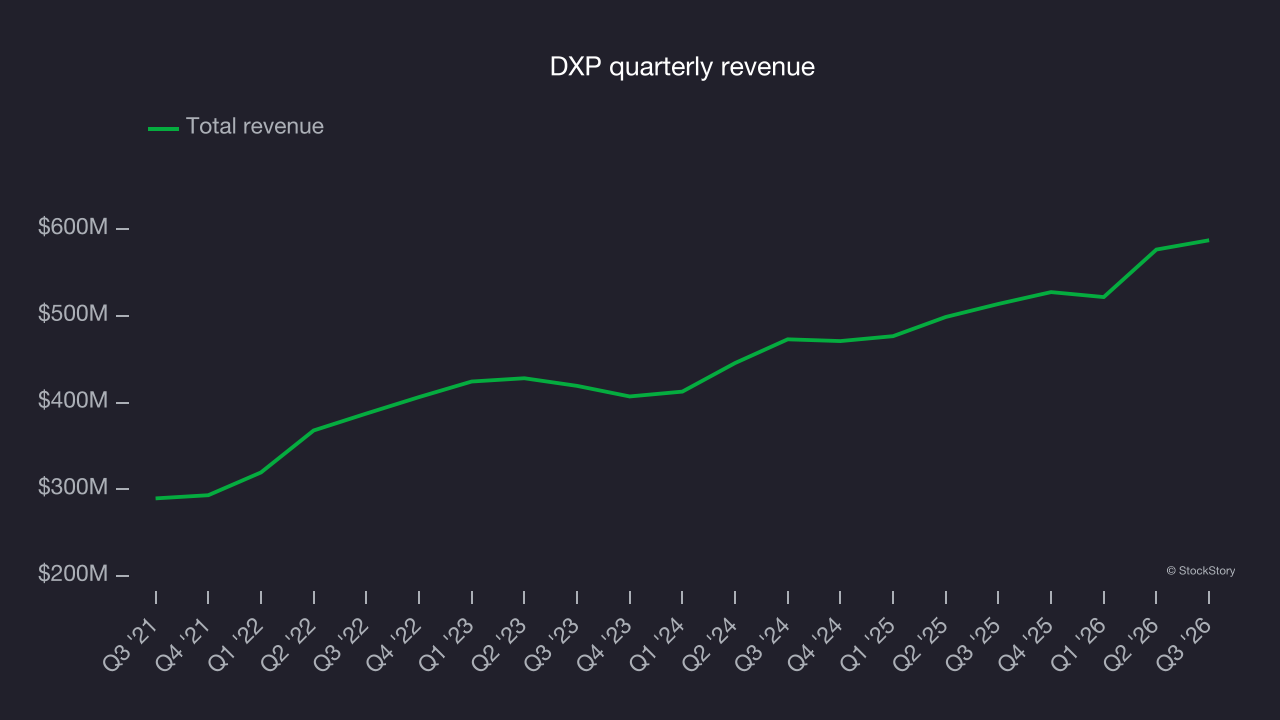
A company’s long-term performance is an indicator of its overall quality. Any business can put up a good quarter or two, but many enduring ones grow for years. Over the last five years, DXP grew its revenue at a strong 16% compounded annual growth rate. Its growth surpassed the average industrials company and shows its offerings resonate with customers.
Long-term growth is the most important, but within industrials, a half-decade historical view may miss new industry trends or demand cycles. DXP’s annualized revenue growth of 12.8% over the last two years is below its five-year trend, but the results still suggest healthy demand. 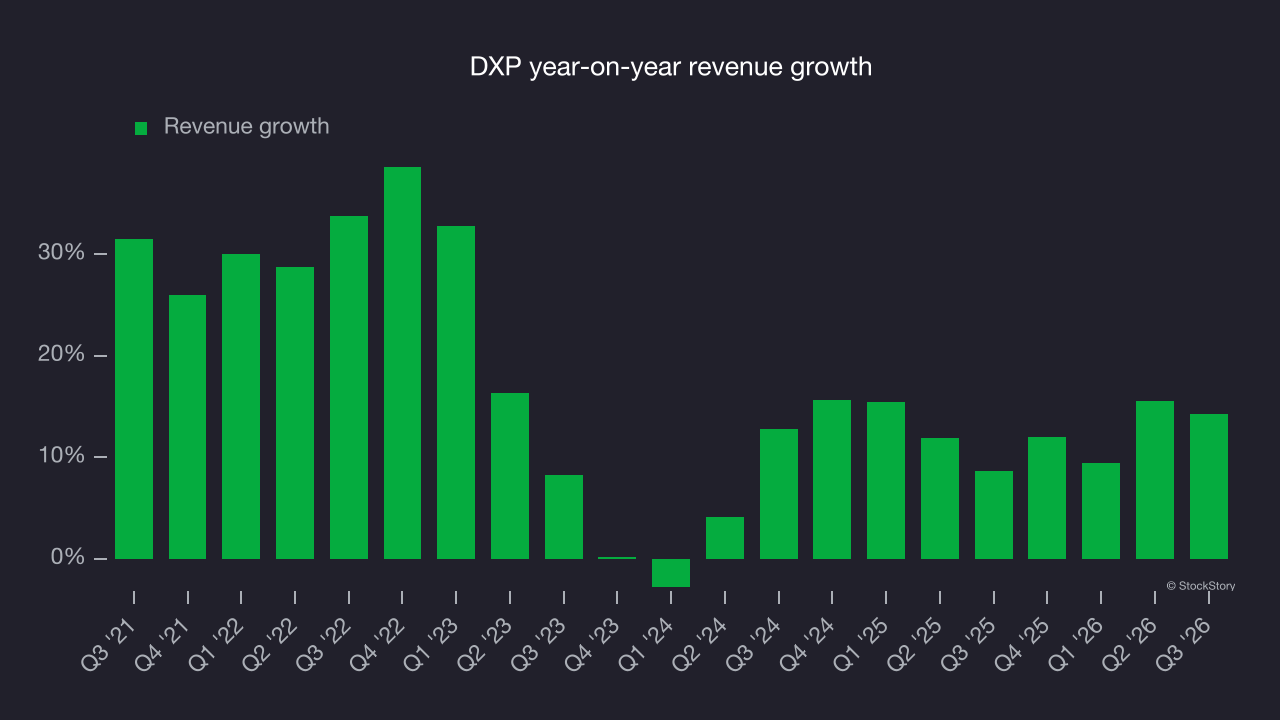
This quarter, DXP’s year-on-year revenue growth was 14.3%, and its $587.2 million of revenue was in line with Wall Street’s consensus estimates.
Looking ahead, sell-side analysts expect revenue to grow 7.7% over the next 12 months, according to S&P, a deceleration versus the last two years. Still, this projection is above the sector average and suggests the market is forecasting some success for its newer products and services.
Operating margin
DXP has done a decent job managing its cost base over the last five years. The company has produced an average operating margin of 8%, higher than the broader industrials sector.
DXP’s operating margin rose by 3 percentage points over the last five years, as its revenue growth provided operating leverage. That expansion shows it’s one of the better maintenance and repair distributors, as most peers saw their margins decline sharply.
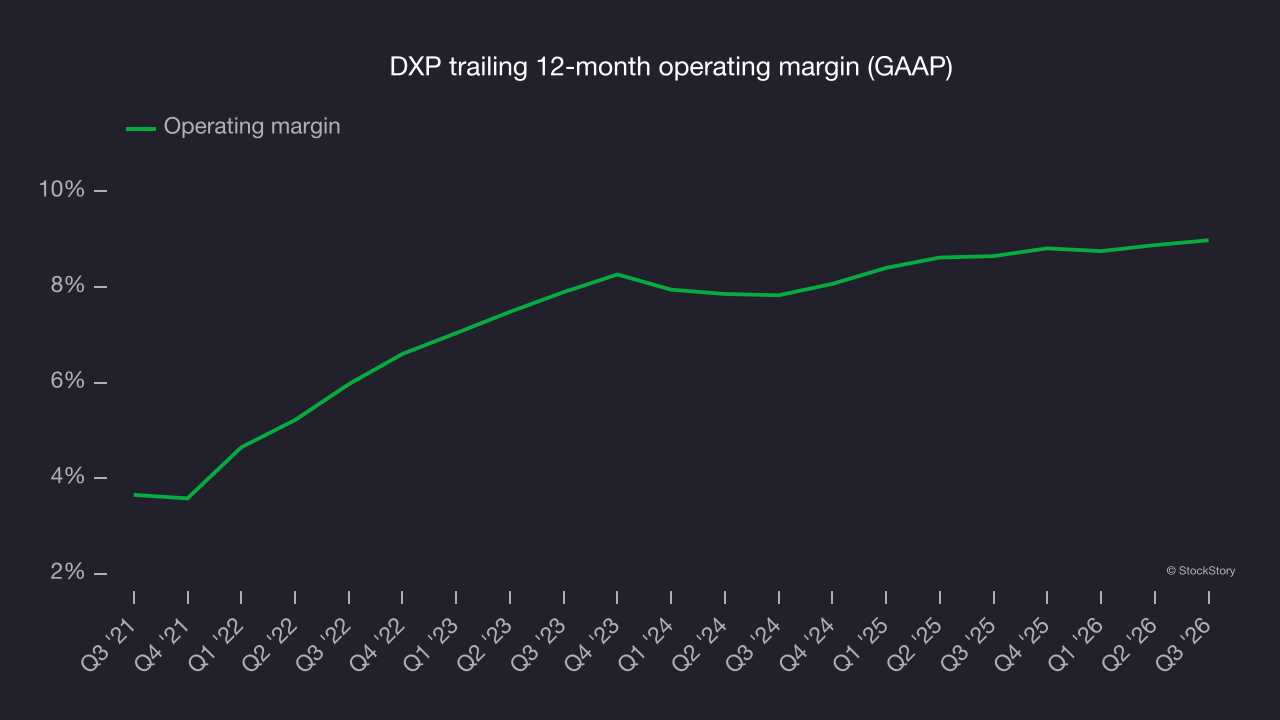
This quarter, DXP generated an operating margin of 8.9%, in line with the same quarter last year. This indicates the company’s cost structure has recently been stable.
Earnings per share
Revenue trends explain a company’s historical growth, but the long-term change in earnings per share, or EPS, points to the profitability of that growth. For example, a company could inflate its revenue through excessive spending on advertising and promotions.
DXP’s EPS grew at a 44.2% compounded annual growth rate over the last five years, higher than its 16% annualized revenue growth. This indicates the company became more profitable on a per-share basis as it expanded.
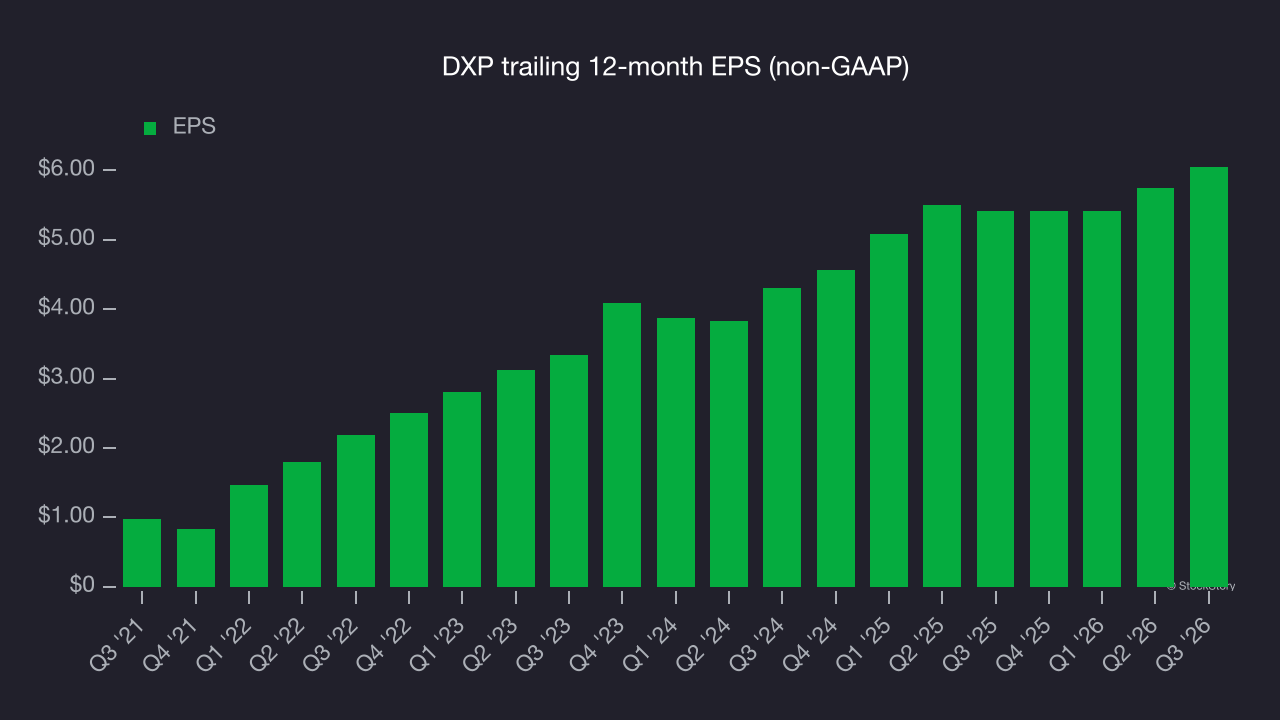
A closer look at DXP’s earnings helps explain the drivers of its performance. As mentioned earlier, DXP’s operating margin was flat this quarter but expanded by 3 percentage points over the last five years. In addition, its share count shrank by 16.4%. These are positive signs for shareholders because improving profitability and share buybacks boost EPS growth relative to revenue growth. 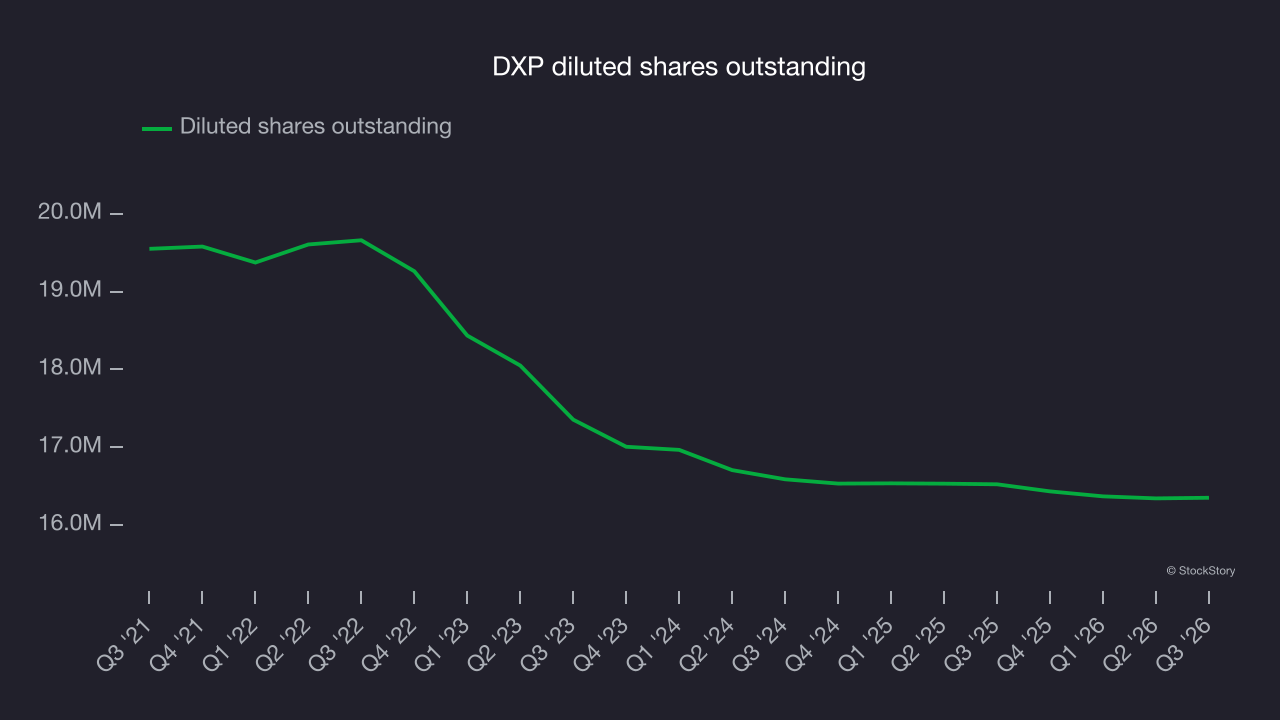
As with revenue, analyzing EPS over a more recent period can provide insight into an emerging theme or development for the business.
For DXP, its two-year annual EPS growth of 18.5% was lower than its five-year trend. Still, that was a solid pace of growth.
In Q3, DXP reported adjusted EPS of $1.64, up from $1.34 in the same quarter last year. Despite growing year on year, the result missed analysts’ consensus estimates, but long-term adjusted EPS growth matters more than short-term movements. Over the next 12 months, Wall Street expects DXP’s full-year EPS to grow 22.1% from $6.05 to $7.39, according to S&P.
Key takeaways from DXP’s Q3 results
DXP’s Q3 results could have been better: Revenue met analysts’ consensus expectations, but EPS missed and EBITDA fell short of Wall Street’s consensus estimates. Shares fell 4.6% to $151.12 immediately after the release.
DXP’s latest earnings report disappointed. One quarter doesn’t define a company’s quality, so let’s explore whether the stock is a buy at the current price. The latest quarter is only one piece of the longer-term business quality puzzle. Quality, combined with valuation, can help determine if the stock is a buy. For more on DXP, read the full research report here (it’s free).