Financial marketplace platform LendingTree (NASDAQ: TREE) reported Q3 2026 results beating Wall Street’s revenue expectations, with revenue up 11.6% year on year to $343.6 million. On the other hand, next quarter’s revenue guidance of $320 million was less impressive, coming in 5.8% below analysts’ consensus estimates. Its GAAP loss of $5.15 per share was significantly below analysts’ consensus estimates.
For more on LendingTree, read our free full research report.
LendingTree (TREE) Q3 2026 highlights:
- Revenue $343.6 million vs S&P analysts’ consensus estimates of $329.6 million (11.6% year-on-year growth, 4.2% beat)
- EPS (GAAP) -$5.15 vs analysts’ consensus estimates of $0.81 (significant miss)
- Adjusted EBITDA $39.63 million vs analysts’ consensus estimates of $34.95 million (11.5% margin, 13.4% beat)
- Revenue guidance $320 million at the midpoint for Q4 2026, below analysts’ consensus estimates of $339.6 million
- EBITDA guidance $152 million at the midpoint for the full year, above analysts’ consensus estimates of $147.9 million
- Operating margin -20.5%, down from 9.3% in the same quarter last year
- Market capitalization $380.2 million
"We are pleased to report our tenth straight quarter of double-digit revenue growth, powered by continued strength in our Insurance segment along with healthy growth in Home driven by great home equity lending results," said Scott Peyree, CEO. "This quarter we rolled-out AI features and distribution improvements to our shopping experience across multiple product lines. Specifically, we have implemented voice AI services to help consumers understand and choose the best offer before talking to a lender, AI overviews on offer pages that assist customers in selecting the best offer for their situation, and controlled distribution that helps a consumer shop in stages for a product to prevent multiple carriers or lenders from contacting the customer at once. Successful expansion of these types of features should ultimately improve consumer satisfaction and drive increased monetization of our traffic."
Revenue growth
A company’s long-term revenue performance is one signal of its overall quality. Even a bad business can perform well for one or two quarters, but a top-tier one grows for years. LendingTree’s 20.8% annualized revenue growth over the last three years was impressive. Its growth beat the average consumer internet company and shows its offerings resonate with customers.
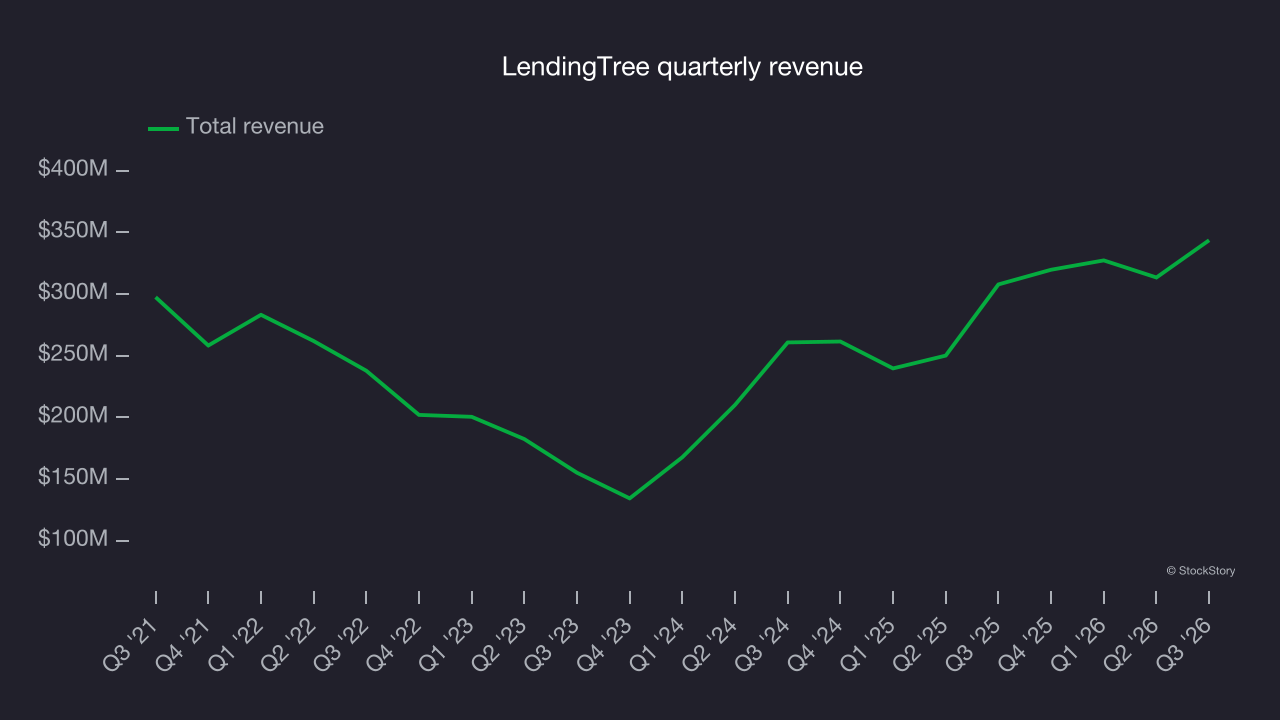
This quarter, LendingTree reported year-on-year revenue growth of 11.6%, and its $343.6 million in revenue exceeded Wall Street’s consensus estimates by 4.2%. Company management is guiding for flat revenue next quarter.
Looking further ahead, sell-side analysts expect revenue to grow 5.8% over the next 12 months, according to S&P, a deceleration versus the last three years. This projection is underwhelming and suggests its products and services will face some demand challenges.
Free cash flow
Free cash flow isn’t a prominently featured metric in company financials and earnings releases, but it’s telling because it accounts for all operating and capital expenses, making it difficult to manipulate.
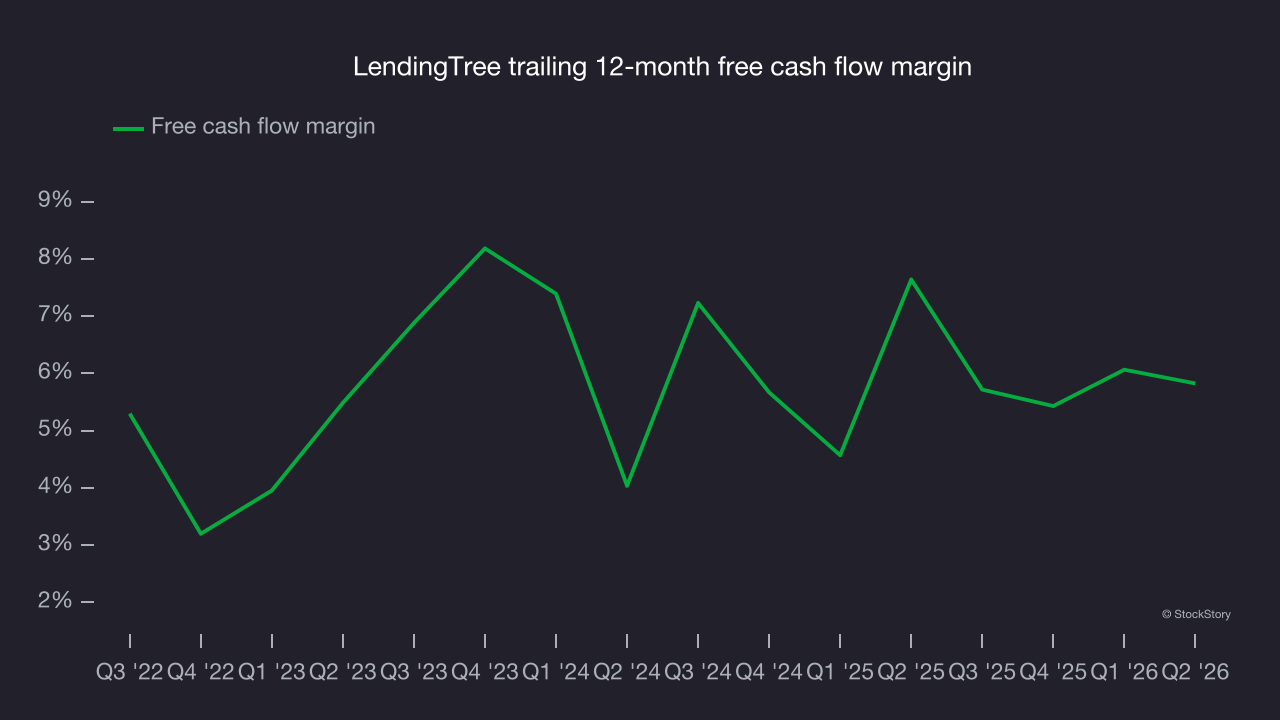
LendingTree has shown decent cash profitability, giving it some flexibility to reinvest or return capital to investors. The company’s free cash flow margin averaged 5.4% over the last two years, slightly better than the broader consumer internet sector.
LendingTree’s margin dropped by 1.4 percentage points over the last few years. If the decline continues, it could signal increasing investment needs and capital intensity.
Key takeaways from LendingTree’s Q3 results
LendingTree delivered a mixed quarter: EBITDA beat analysts’ consensus estimates by a wide margin, and full-year EBITDA guidance topped Wall Street’s consensus. But the outlook for next quarter was softer, with revenue guidance falling short of consensus estimates. Shares rose 2.3% to $29.63 immediately after the results.
LendingTree’s latest quarter does matter, but not nearly as much as longer-term fundamentals and valuation when deciding if the stock is a buy. Read our full research report here (it’s free).