Alternative investment manager Blackstone (NYSE: BX) fell short of the market’s revenue expectations in Q3 2026, with sales falling 8.2% year on year to $3.06 billion. Its GAAP profit of $0.83 per share was 34% below analysts’ consensus estimates.
Is now the time to buy Blackstone? Find out by accessing our full research report, it’s free.
Blackstone (BX) Q3 2026 highlights:
- Assets Under Management: $1.37 trillion vs analyst estimates of $1.38 trillion (10.2% year-on-year growth, 0.8% miss)
- Revenue: $3.06 billion vs analyst estimates of $3.21 billion (8.2% year-on-year decline, 4.6% miss)
- Fee-Related Earnings: $1.57 billion (6.2% year-on-year growth)
- EPS (GAAP): $0.83 vs analyst expectations of $1.26 (34% miss)
- Market Capitalization: $87.65 billion
Company overview
With over $1 trillion in assets under management and investments spanning real estate, private equity, credit, and hedge funds, Blackstone (NYSE: BX) is a global alternative asset manager that invests capital on behalf of pension funds, sovereign wealth funds, and other institutional investors.
Revenue growth
A company’s long-term performance is an indicator of its overall quality. Any business can have short-term success, but a top-tier one grows for years. Unfortunately, Blackstone’s 7.4% annualized revenue growth over the last five years was mediocre. This wasn’t a great result compared to the rest of the financials sector, but there are still things to like about Blackstone.
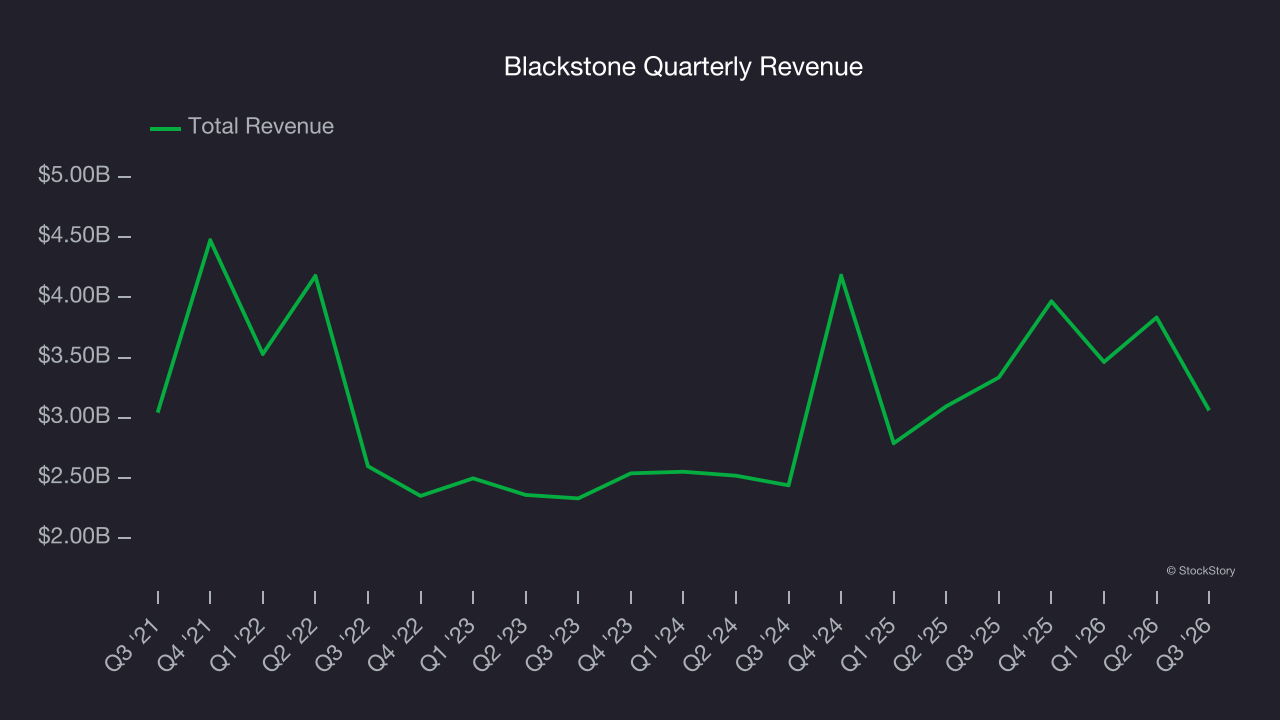
We at StockStory place the most emphasis on long-term growth, but within financials, a half-decade historical view may miss recent interest rate changes, market returns, and industry trends. Blackstone’s annualized revenue growth of 19.4% over the last two years is above its five-year trend, suggesting its demand recently accelerated. 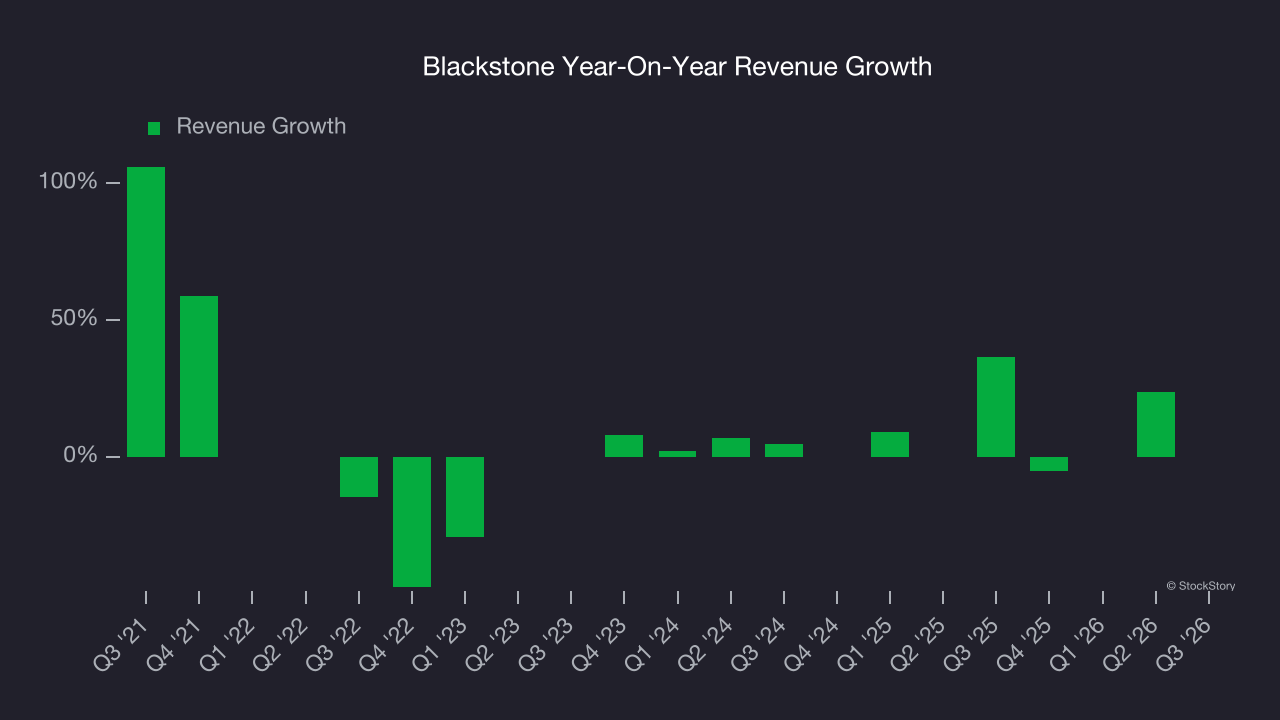 Note: Quarters not shown were determined to be outliers because they were impacted by outsized investment gains/losses that are not indicative of the recurring fundamentals of the business.
This quarter, Blackstone missed Wall Street’s estimates and reported a rather uninspiring 8.2% year-on-year revenue decline, generating $3.06 billion of revenue.
ONE MORE THING: The $21 AI Application Stock Wall Street Forgot. While Wall Street obsesses over who’s building AI, one company is already using it to print money. And nobody’s paying attention.
AI chip stocks trade at ridiculous valuations. This company processes a trillion consumer signals monthly using AI and trades at a third of the price. The gap won’t last. The institutions will figure it out. You need to see this first. Read the FREE Report Before They Notice.
Assets under management (AUM)
Assets Under Management (AUM) represents the total value of investments that a financial institution manages for its clients. These assets generate steady income through management fees, creating predictable revenue streams that remain stable so long as clients remain invested with the firm.
Blackstone’s AUM has grown at an annual rate of 14.6% over the last five years, better than the broader financials industry and faster than its total revenue. When analyzing Blackstone’s AUM over the last two years, we can see that growth decelerated to 11.1% annually. Fundraising or short-term investment performance was a net detractor to the company over this shorter period since assets grew slower than total revenue. That said, assets aren’t the be-all and end-all due to their unpredictable and cyclical nature.
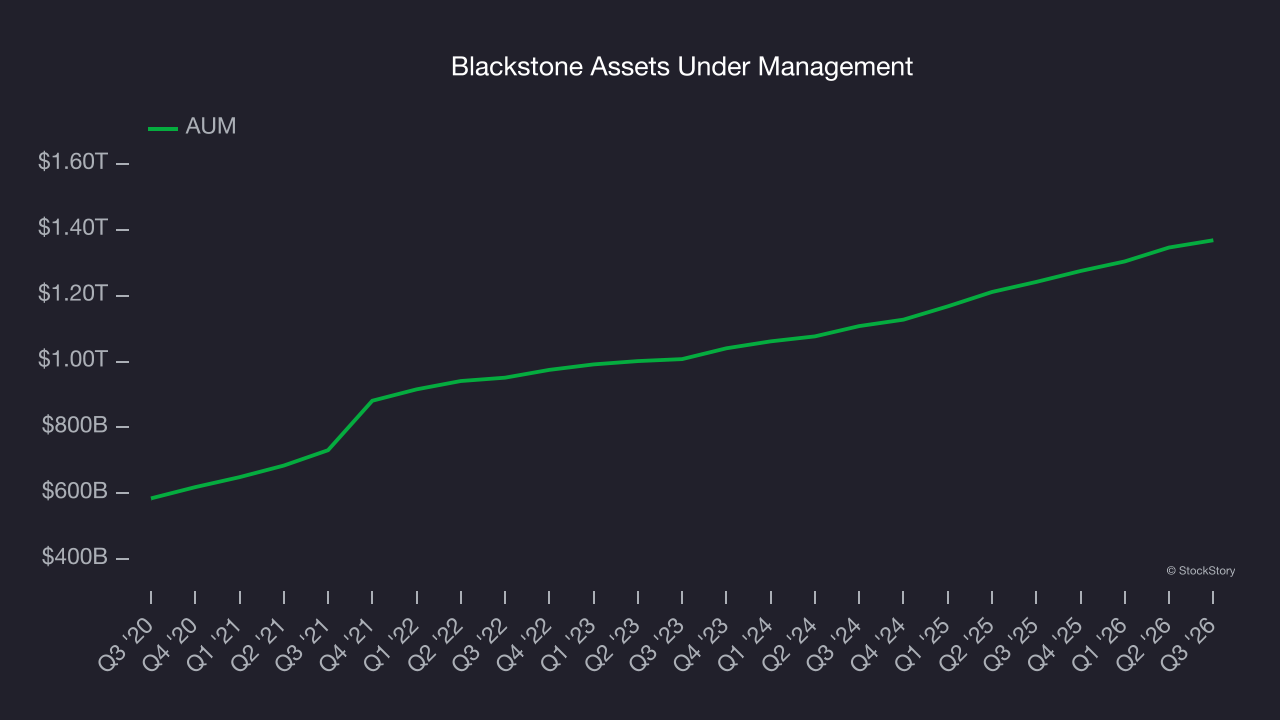
In Q3, Blackstone’s AUM was $1.37 trillion, falling 0.8% short of analysts’ expectations. This print was 10.2% higher than the same quarter last year.
Key takeaways from Blackstone’s Q3 results
We struggled to find many positives in these results. Its EPS missed and its revenue fell short of Wall Street’s estimates. Overall, this was a weaker quarter. The stock traded down 1.7% to $107.75 immediately after reporting.
Blackstone didn’t show its best hand this quarter, but does that create an opportunity to buy the stock right now? The latest quarter does matter, but not nearly as much as longer-term fundamentals and valuation, when deciding if the stock is a buy. We cover that in our actionable full research report which you can read here (it’s free).